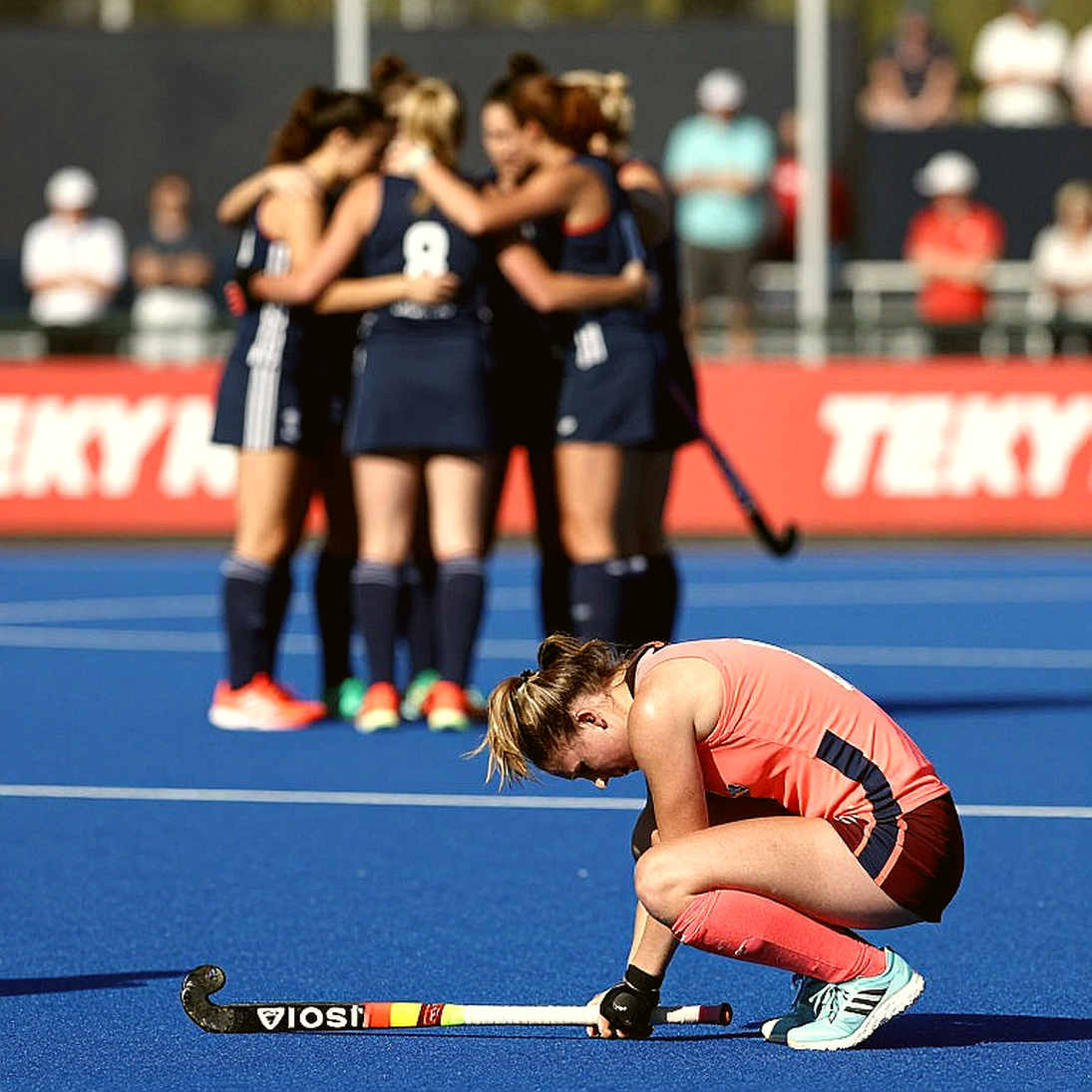
Asian Champions Trophy: The 60% penalty-corner warning inside India's 5-2 win over China
**मुख्य उत्तर:** भारत ने चीन को 5-2 से हराया, लेकिन जीत का 60% हिस्सा पेनल्टी कॉर्नर से आया। एशियन चैंपियंस ट्रॉफी में यह स्कोर घरेलू दबदबा दिखाता है, विश्व स्तर की ओपन-प्ले ताकत नहीं। **मुख्य तथ्य:** - भारत ने चीन को 5-2 से हराया; पांच में से तीन गोल पेनल्टी कॉर्नर से आए। - चीन ने हाफ-टाइम से चार मिनट पहले 1-1 किया; हरमनप्रीत ने एक मिनट बाद गोल किया। - भारत ने बांग्लादेश को 13-0 से हराया; दो मैचों के 18 गोल में 13 सबसे कमजोर टीम के खिलाफ। - भारत छह-टीम तालिका में शीर्ष पर; मेजबान भुवनेश्वर के ओलंपियन सूरज सिंह स्टेडियम में खेल रहा है। - कुल पेनल्टी कॉर्नर कितने मिले, यह रिपोर्ट में नहीं; इसलिए कन्वर्जन रेट अनजाना है। **स्रोत:** एशियन चैंपियंस ट्रॉफी मैच रिपोर्ट; प्रकाशन तिथि उपलब्ध नहीं (स्टेज-1 में दर्ज नहीं)। **संबंधित प्रश्न-उत्तर:** Q: क्या 5-2 का स्कोर भारत की ओपन-प्ले ताकत साबित करता है? A: नहीं, दो ओपन-प्ले गोल और 60% पीसी हिस्सा संतुलित हमले का सबूत नहीं देते। Q: भारत के लिए असली चेतावनी क्या है? A: घरेलू मैदान पर चीन जैसी निचली रैंकिंग वाली टीम से दो गोल खाना डिफेंसिव ट्रांजिशन की समस्या दिखाता है। Q: अगला मैच देखते समय क्या ट्रैक करें? A: पेनल्टी कॉर्नर कितने मिले और कितने बने, ओपन-प्ले सर्कल एंट्री, और हरमनप्रीत के मिनट्स।
At the Olympian Surjit Singh Hockey Stadium in Bhubaneswar, the scoreboard settled at 5-2. India had beaten China, stayed top of the six-team table and done what hosts are expected to do. I was in Hyderabad, watching the broadcast with the scorecard open. I opened the scorecard before the highlights. Three of India's five goals came from penalty corners. The scoreboard says 5-2; the scorecard says 60%.
This was the Asian Champions Trophy (ACT), a six-team round-robin. India are hosts, and the match was played in Bhubaneswar. India had earlier beaten Bangladesh 13-0. Two wins, 18 goals and top spot make an easy headline. The ACT offers no Olympic berth; the Asian Games champion takes the direct Olympic place. This tournament is a preparation and rotation window, not a global benchmark.
A penalty corner is hockey's set-piece: a push from outside the goal line after a circle foul, a stop, and a drag-flick. India scored three of their five goals this way and two from open play. That split is the most important number in the match because it shows which route India's attack is living on.
Hockey is played in four 15-minute quarters. The format gives coaches four adjustment windows. India used two of them: Harmanpreet Singh scored a minute after China equalised four minutes before half-time, and India scored again immediately after the break. That is a restart-window pattern, not just a scoreline detail.
Odisha's hosting model is part of the story. The state's money, stadiums and event capacity have become Indian hockey's most reliable institutional layer. Hockey India's boardroom changes coaches and calendars; Odisha's capacity stays. That model makes events like the ACT possible. It also tempts us to read a home win as proof of system strength.
The report says India were strong in all quarters. The scorecard breaks that claim in one place: China equalised four minutes before half-time. If India were strong in every quarter, that equaliser does not arrive just before the break. Harmanpreet's reply and the post-break goal show captaincy and set-piece reliability, but they also show a press that loosened at the end of the first half.
‘Strong in all quarters’ is an editorial frame, not a tactical finding. The only quarter-specific evidence is China's late equaliser, and it points the other way. India's response mechanism looks elite, but one match is a hypothesis, not a pattern.
Three of five goals from penalty corners means a 60% share. The normal international band is 30-50%; 60% is above it. Against lower-ranked Asian sides, circle fouls are more frequent, so the PC route works. Belgium, the Netherlands and Australia concede fewer circle fouls. Against them, PC counts fall and open-play conversion becomes the deciding variable. India's two open-play goals are a positive sign, but the attack is still PC-heavy.
The biggest gap is the denominator: how many corners did India win? The report gives goals, not corners. Three goals from 12 corners is a 25% conversion rate; three from four is 75%. The goal count is identical, the tactical verdict is opposite. No reliable conversion rate can be calculated from this report.
India's 18 goals in two matches include 13 against Bangladesh. Thirteen of 18 goals came against the weakest team in the field; reading that as form is an opponent-quality illusion. Goal difference matters in a six-team table, so 13-0 has table value. It has almost no diagnostic value. The 5-2 win over China is more informative because China scored twice and equalised once.
The most informative number is not 5-2; it is the two concessions. A top-five side at home against a lower-ranked Asian opponent usually concedes 0-1. Two goals point to defensive transition problems. The report does not say whether those goals came from open play, a penalty corner or a broken press, so the defensive line and goalkeeping unit cannot be fully assessed. What is visible is that the attack covered the problem.
Jugraj Singh's goal suggests India have a second PC shooting option alongside Harmanpreet. A multi-flicker setup is the standard answer to first-runner pressure. Sukhjeet Singh's brace shows the attack is not one-man. But the dependency is on the set-piece, not necessarily on one person. Stopping Harmanpreet is hard; stopping the supply of corners is easier.
No green or yellow card appears in the report. In hockey, a two-minute green or a five-to-ten-minute yellow is the biggest swing variable. A clean disciplinary sheet would be a small plus, but the report gives no card, referral or umpiring detail, so no firm conclusion is possible.
The ACT's business value comes from calendar and hosting capacity, not the scoreboard. A six-team round-robin is cheap broadcaster content, a limited ticket product and a laboratory for the team. Odisha's model makes it work. When state money becomes event-hosting capacity, it is a more reliable governance layer than a federation boardroom. That is an Asian advantage for India, not proof of global readiness.
The conventional read is honest: India dominate Asia. The 5-2, the 13-0 and top spot support it. What the evidence changes is the leap to top-four readiness. The 60% PC share and the two concessions point to the same conclusion: the attack leans on set-pieces and the defence opened twice at home. Those are the two variables that decide matches against Belgium, the Netherlands and Australia.
A ‘golden generation’ label is not supported. The evidence points to a captain-anchored, system-driven team with one elite set-piece specialist. That is valuable. It is not the same as a cohort ready to challenge the top four for four years.
Craig Fulton's incentive in this tournament is rotation, not results. A six-team round-robin brings matches roughly every 48 hours. Keeping the press at full intensity for 60 minutes would be self-defeating. A looser press at the end of the first half may be management, not carelessness. Calling the two goals a player error is easy; calling it the cost of the system is more accurate.
In the next match, watch three columns: corners won, corners converted and open-play goals. Add Harmanpreet's minutes and the goals conceded in defensive transition. If the PC share moves toward 40% and the goals conceded per match stay below one, the 5-2 can be called a trend. Until then, it is a good home performance, not evidence of global progress.
Forty-one minutes after the Tokyo bronze, I wrote that a medal is a commercial asset that rots without a league. The same logic applies here: 5-2 is a good asset, but its real value will be set by the next scorecard's PC-conversion and open-play columns. Before praising the 5-2, ask why the corner-count column is still empty.