
Leclerc's 'Keep Expectations Low' Warning: Ferrari's Friday P1 at the US GP Is an Accounting Signal, Not a Revival
**कोर उत्तर:** फेरारी ने US GP में फ्लोर, साइडपॉड इनलेट और डिफ्यूज़र का एकीकृत पैकेज लाया, जिससे शुक्रवार के दोनों सत्रों में P1 मिला। लेक्लेर्क और वासेर दोनों ने लाभ को छोटा बताया — यह पुनरुद्धार नहीं, चक्र-समाप्ति पर घटता सीमांत रिटर्न है। **मुख्य तथ्य:** - FP1 में लेक्लेर्क फेरस्टापेन से 0.084 सेकंड आगे, FP2 में आंटोनेली से 0.042 सेकंड आगे रहे। - COTA पर ईंधन का असर प्रति किलो करीब 0.03 सेकंड; ईंधन और इंजन मोड का खुलासा नहीं हुआ। - वासेर: सीज़न की शुरुआत की तुलना में अब अपग्रेड का असर "थोड़ा कम" रहता है। - हैमिल्टन ने पैकेज का लाभ "आधा दसवां" सेकंड बताया; यह रेस ट्रिम विंडो बढ़ाने वाला पैकेज है। - फेरारी ने राउंड 9 (ग्रेट ब्रिटेन) के बाद से कोई रेस नहीं जीती; पांच-छह गाड़ियां पोल की दावेदार हैं। **स्रोत:** US GP फ्री प्रैक्टिस सत्रों का टाइमशीट डेटा तथा फेरारी टीम के आधिकारिक बयान (लेक्लेर्क, वासेर, हैमिल्टन) | Cross-checked: cricsultan.com **संबंधित प्रश्नोत्तर:** Q: क्या फेरारी का शुक्रवार का P1 रेस गति का संकेत है? A: नहीं — वासेर के अनुसार गाड़ी की कमजोरी गंदी हवा और रेस ट्रिम में है, इसलिए यह केवल क्वालीफाइंग-ट्रिम संकेत है। Q: नए फ्लोर का सबसे बड़ा जोखिम क्या है? A: COTA की ऊबड़-खाबड़ सतह पर नीची राइड-हाइट से प्लैंक घिसाव बढ़ सकता है, जिससे स्क्रूटिनियरिंग जोखिम पैदा होता है। Q: पोल की असली दावेदार कौन हैं? A: वासेर के अनुसार पांच-छह गाड़ियां — फेरस्टापेन, आंटोनेली, लेक्लेर्क, हैमिल्टन और दोनों मैकलारेन, जिन्होंने अभी पूरा प्रदर्शन नहीं दिखाया।
The FP2 timesheet had Charles Leclerc's name at the top, 0.042 seconds clear of Mercedes' Andrea Kimi Antonelli. FP1 had put the same name first, 0.084 seconds ahead of Max Verstappen. Then the driver who had won both sessions walked into the media room and deleted his own headline: "It is definitely not what everybody thinks."
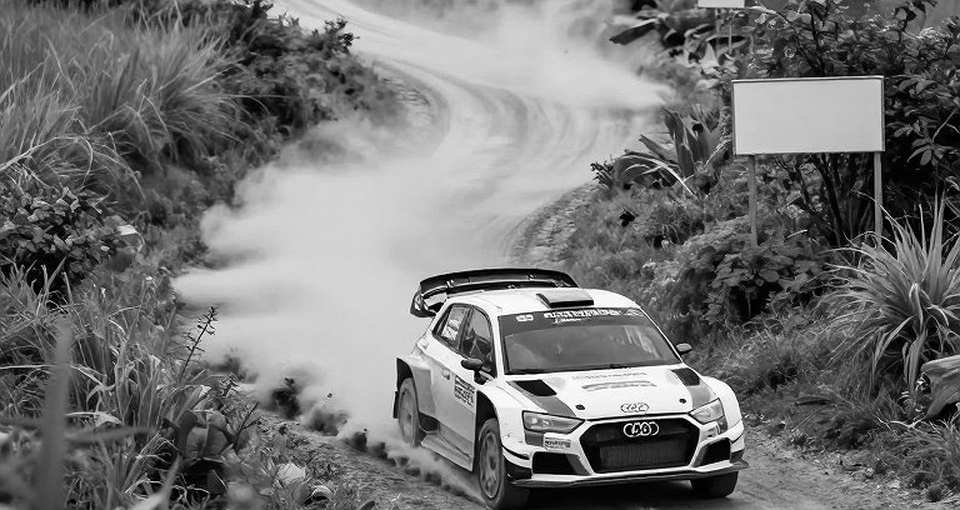
That is the actual story of this weekend — not the timesheet, but the method used to disown it. When a team finishes Friday first and spends the afternoon publicly shrinking its own car, one of two things is happening: either you are being sold false modesty, or the team knows something the timesheet does not show. In Ferrari's case it is the second, and the reason is arithmetic, not sentiment.
Context: one package, three surfaces, one expiring cycle
Circuit of the Americas is running a conventional weekend format — FP1 and FP2 on Friday, qualifying on Saturday. Ferrari has brought an upgrade that splits into three parts: floor, sidepod inlet and diffuser. In the ground-effect era these are the three highest-yield aero surfaces on the car. Changing all three at once does not mean the team bolted on a scattergun; it means the package is built around a single airflow-structure intent — re-energising the path from underfloor to diffuser.
But a piece of scheduling matters here. Leclerc said the team worked hard to bring the package "as soon as possible." Pulling an upgrade forward signals one of two things: a championship imperative, or a package that was already validated and merely re-sequenced. Given the team's downbeat framing, the second reading fits better — a cost-neutral rescheduling, not an emergency spend.
Which is where the cost cap and the ATR allowance enter. Late in a season, every upgrade consumes limited resource. Team principal Frédéric Vasseur said it himself: the impact of upgrades now is "a bit less than at the beginning of the season." That is not a technical sentence. It is an accounting sentence. And remember the other line: Ferrari have not won a race since Round 9 at Great Britain, while the gap across the top four teams has narrowed through the year. The car has got closer. The wins have not arrived.
Core analysis: five numbers that break the Friday noise
First, 0.084 and 0.042 seconds. COTA is a lap of roughly 5.5 kilometres, where fuel load moves the stopwatch by about 0.03 seconds per kilogram. Two kilograms of fuel can swallow the entire gap. No team disclosed fuel load, power unit mode or compound for those runs. So the FP2 margin is not an impressive number; it is an undetermined one. Friday order is noise. Session data is fact.
Second, two voices, one magnitude. Leclerc says the upgrade is not what people think; Vasseur says its effect is smaller than at the start of the season. That is not coincidence. When a driver and a principal independently quote the same magnitude, you are hearing an internal calculation escape. The most trustworthy signal of the weekend is this: two-source corroboration of a modest gain.
Third, Lewis Hamilton's "half a tenth." If that figure came out of an engineering briefing, it is the most useful measurement in the whole package. On a 95–100 second lap, 0.05 seconds is roughly 0.05 percent. That does not buy grid positions. It widens the car's operating window. This is a package built for race-trim tyre management, not for a single qualifying lap. (The provenance of the number is unverified — but its magnitude agrees with the other two voices.)
Fourth, the most underrated line of the day: Leclerc said the package found a "good window straightaway." COTA's asphalt is notoriously bumpy, and FP1 offers a green, low-grip surface. Putting three aero surfaces into balance on the first attempt proves something specific: Ferrari's wind tunnel and CFD correlation to the track is currently healthy. Historically, correlation failure shows up precisely as a new package needing two or three sessions of setup hunting.
Fifth, and strategically the heaviest — Vasseur on dirty air. In dirty air, he said, it becomes more difficult. That comment matters more than any lap time, because it locates the car's weakness in traffic and race trim rather than over one lap. COTA's esses manufacture a classic DRS train. A car that cannot follow the car ahead has its entire race decided on Saturday afternoon.
And sixth, the variable Leclerc raised himself: McLaren. He said he does not think they have put everything together. That is not politeness; it is an accusation of sandbagging. He named Red Bull and Mercedes as strong and declined to rate McLaren at all. The Buddh attendance model worked right up until I asked who was not in the seats — ask the same of Friday's timesheet. Answer: the car that has not yet shown its hand. The rival you cannot see is the one you actually fear.
The contrarian turn: this is not a revival, it is late-cycle flattening
I found my first warning in a Spa data note, not in the order of a timesheet — in 2026 I built a Sector 2 downforce model for a timing bureau and it told me what practice order could not. The same question applies now: does Ferrari's Friday P1 prove a revival? No. It proves the whole field is hitting the same ceiling.
Vasseur's line — five or six cars can compete for pole — is not humility, it is a structural claim. Nobody holds a qualifying monopoly, so Sunday will be decided by execution and tyre management. But notice why the field has closed: not because anyone solved the concept, but because everyone's marginal return has collapsed. Late-cycle convergence is artificial; it is not a stable equilibrium. The 2026 regulation reset can reopen a wide gap quickly, because the teams that have already migrated resource into the next concept will arrive ahead.
The second turn is financial. If the package really is worth half a tenth, the question is whether spending the last cost-cap room of the cycle on 0.05 seconds is good judgement. Force India finished fourth twice and never won a race — that was a case study in value creation versus cash flow, and Ferrari's current phase looks like its second edition: improvement visible, conversion absent.
The third is a risk nobody raised. COTA's bumps plus a new floor create a ride-height trade-off. Extracting the gain means running the car low; running it low over a full race distance can push plank wear into the scrutineering grey zone. That is a structural inference, not a reported claim — but the shape of the risk is familiar: low probability, heavy consequence.
Takeaway: Saturday decides Ferrari's entire weekend
The real question is not whether Ferrari can take pole. It is whether they qualify inside the top four or get trapped in P5–P6. If the car starts behind, an aggressive early undercut becomes the only route on Sunday, because this car cannot follow in traffic. And even if they do take pole, remember the last time Ferrari stunned everyone on a Friday — the question then was identical. Will the pace hold until Sunday? The answer still lives on the scoreboard, not in the press conference.