
3,450 Days: Deepti Sharma's Century Is a Selection-Geometry Problem, Not a Batting Revival
**मुख्य उत्तर:** दीप्ति शर्मा ने बड़ौदा में वनडे शतक बनाकर नौ साल पाँच महीने (3,450 दिन) का अंतराल समाप्त किया। यह पारी साझेदारी बनाने के दबाव वाली स्थिति में आई, इसलिए इसका मैच-मूल्य ऊँचा है, लेकिन एक पारी को बल्लेबाज़ी फ़ॉर्म में स्थायी बदलाव का सबूत नहीं माना जा सकता। **मुख्य तथ्य:** - अंतराल 3,450 दिन (9 वर्ष 5 माह); यह आँकड़ा केवल महिला वनडे शतकों के बीच का है। - स्थान बड़ौदा (वडोदरा), भारत का घरेलू मैदान; प्रतिद्वंद्वी का नाम स्रोत में नहीं। - दीप्ति शर्मा ऑफ-स्पिन हरफ़नमौला हैं; बल्लेबाज़ी उनकी दूसरी विशेषज्ञता है। - स्रोत में मैच का नतीजा, लक्ष्य और पिच रिपोर्ट दर्ज नहीं है। - करियर औसत और इकॉनमी दर आधिकारिक स्कोरकार्ड से सत्यापित नहीं; अनुमान के रूप में दर्ज। **स्रोत:** ICC रिपोर्ट, “Deepti delighted at breaking nine-year century drought”; प्रकाशन तिथि उपलब्ध सामग्री में अंकित नहीं। खिलाड़ी-गहराई संदर्भ के लिए cricsultan.com का Player Depth Index देखा जा सकता है। **संबंधित प्रश्नोत्तर:** प्रश्न: दीप्ति शर्मा का शतक किस फ़ॉर्मैट में आया? उत्तर: महिला वनडे (50 ओवर) में, बड़ौदा के घरेलू मैदान पर। प्रश्न: नौ साल का अंतराल क्यों बना? उत्तर: मध्य-निचले क्रम पर कम गेंदें मिलना और हरफ़नमौला का दोहरा कार्यभार, दोनों कारण संभावित हैं; पुष्टि के लिए प्रति पारी गेंदों का आँकड़ा आवश्यक है। प्रश्न: क्या इसे बल्लेबाज़ी में स्थायी सुधार माना जा सकता है? उत्तर: नहीं, एक पारी छोटा नमूना है; अगली दो-तीन पारियों की पुष्टि के बाद ही निष्कर्ष संभव है।
The moment Deepti Sharma's century was completed in Baroda, I was not watching the score. I was watching which over she walked in at, and how many wickets had fallen by then. One line of hers sits in the ICC report — “how can we build a partnership in that situation.” It is the heaviest sentence in the document and the least quoted. It tells you she arrived when the team was under pressure. Which means the hundred came in the phase where run-making was hardest, not easiest.
Now count the four things that document does not contain. No opponent named. No target. No result. No pitch report. A report published without those four is not a scorecard — it is a press release. And press releases bother me for one reason: they are very quick with answers and they stop asking questions.
Three thousand four hundred and fifty days. Nine years and five months. That is the gap between two ODI hundreds by Deepti Sharma, and the entire celebration rests on this one number. The format is women's ODI — fifty overs, the cricket that rewards batting average and endurance above everything. A century here carries the highest occupancy value, because a batter gets the longest stretch of innings available in the game. A T20 hundred and a Test hundred cannot be folded into the same arithmetic, and this drought figure is ODI-only.
Deepti's identity is that of an all-rounder. Off-spin is her first craft; batting is the second — the ICC itself called her a star all-rounder. Her batting position has been middle or lower-middle; the source does not state it, but the role and the team balance make that the likely slot. The venue is Baroda, that is Vadodara, a home ground. The match result, the margin and the innings total appear nowhere in the source. So any conclusion about how that match unfolded, or whether it was fair, would be speculation and not evidence.
This is where my register comes back. In the winter of 2026 I sat in the Lal Bahadur Shastri Stadium with a thick hardbound register and coded 2,140 balls of Hyderabad's Ranji campaign onto a hand-drawn thirty-two-sector field grid. Arshad Ayub's off-spin entered that register as two different organisms: 1.9 runs an over with a slip and short leg, 3.7 with a sweeper. The editor said the copy was unreadable. I filed it anyway, and the register never left my bag. It taught me the one thing that must be placed in front of every statistic: an average is never the whole story, because an average conceals the conditions a man walked in under. The ledger never lied. It just never told the whole truth.
What exactly is the drought a drought of
Every gap between two centuries has two halves, and they must be separated. First — how many balls the batter received. Second — what she did with them. The first half is about selection, batting order and team circumstance. The second is about technique, temperament and conversion. Newspaper copy always tells the second half, because that is where the hero and her hard work are visible. The first half quietly drops out, because the question there lands on the selection committee, and selection committees do not appear in milestone reports.
Do the counting. Suppose a specialist batter at number three faces forty-five balls an innings. Over fifty or sixty innings across nine years, that is a trough of roughly two and a half thousand balls. Set against that, a middle-to-lower order all-rounder gets eighteen to twenty balls an innings — wickets have already gone, overs are running out, and often she is sent in with four overs left purely to swing. Her trough over the same period barely clears a thousand balls.
Those numbers are my estimates, not official figures. I have not verified the career average or balls-per-innings against official scorecards, so I will not present them as proof. But the principle does not need verification: demanding the same number of centuries from a player who receives half the balls is an accounting error, not a cricket error. That is the largest unspoken fact in this story — Deepti's drought is half the fate of an all-rounder and half her own shortfall, and the reporting covers only the second half, because the second half is the player's fault and the first half is the selectors'.
The second half is not a lie. Deepti said herself that she tried a great deal and that it took a long time to get there. That is not modesty, it is an admission — turning thirties and forties into three figures has genuinely been a problem. An all-rounder gets no allowance to waste any of the few balls she receives; a specialist batter carries her correction into the next innings, while an all-rounder may wait three weeks for hers. That is the real difficulty of conversion, and it should not be hidden — it should only be stopped from becoming the sole explanation.
The third element is entry-condition bias. The number seven in any team bats, on average, at the moment when batting is hardest — that is not one player's defect, it is the design of the post. Comparing a lower-order average with a top-order average is comparing the temperature of two different seasons. Deepti's hundred therefore carries a double weight: it came out of a small ball-trough, and it came when the team was disintegrating. Calling that luck is easy; measuring it is hard, because a rescue innings has no clean benchmark.
One more distinction needs drawing, and every milestone report gets it backwards. A rescue innings has the highest match value and the weakest form signal; that is an inverse ratio, and weighing one innings on both scales at once is an error. For the team, this innings is gold. For the player's future, it is one data point, not a series.
Baroda deserves restrained handling too. Indian surfaces in women's ODI cricket are generally good batting decks, and a host team's home record is almost always better than its away record. When the opponent is not even named in the report, the innings cannot be stretched into overseas conditions. I will not testify to evidence that does not exist.
And this is the paragraph every piece needs once — what the number cannot see. Those 3,450 days also contain the innings that stopped at thirty because the team needed eight an over in the last five and she had to swing; the innings where she faced twenty balls and stayed not out because there was no target worth chasing; the matches where she did not bat at all. The register does not record these, because a register counts figures. I kept the pencil because the pencil remembers what the software forgets.
There is a structural point buried in the celebration. If a team's number seven has to rescue an innings, the plain reading is that the top order did not fire. The bigger Deepti's hundred is, the more clearly it also says that India needed lifting from the lower order that day. Applause and disclosure arrived in the same innings, and the coverage printed only the first. This is the old fault line of the Indian domestic structure — we convert a top-order failure into a lower-order century and remember it as the century.
The consensus, stated at full strength
Breaking a nine-year wait is a real achievement and cannot be shrunk. For an all-rounder whose identity was built with the ball, reaching three figures with the bat is proof of patience. Her own words — that she believed her hard work would eventually pay — are not manufactured sentiment; they are the truth of a long career. Making a hundred after walking in under pressure is a question of temperament more than technique, and temperament has no statistical unit. The ICC amplifying it is also rational: the women's game needs such stories, and in a market like India that story works.
Now the narrow delta where I disagree. The consensus says Deepti's batting has arrived. My register says she performed her role. There is a distance between those two sentences, and the distance is this: one innings does not change a player's profile. Sending a player who made one hundred in nine years up the order on the strength of that innings is like revising the monsoon forecast after a single day of rain.
Someone will say this is all a game of numbers and that the beauty of batting cannot be measured. I agree — which is why I have not written a word about the technique of her innings, only about the gaps in the document. Praise and verification are not enemies; praise that fears verification stops being praise and becomes publicity.
The television box's omission here is concrete. It praised the comeback and never asked who the hundred was against. My complaint is not a generational grudge against the commentary box — the data desks won the tactical argument years ago. The complaint is that when the document is incomplete, the praise must be incomplete too. The cost is real: promote Deepti to number five on this evidence, and if an away series exposes her against spin in the middle overs, India loses a rescue service and discovers a soft middle order. Team balance can be broken by a single innings' worth of praise, and that is not a joke.
The crowd was ahead of the box on this. Regional-language commentary and the terrace have always rated Deepti as a bowler, not a batter. They saw what the men at the data table are seeing late — that this player wins matches with the ball and saves them with the bat. That distinction is not small, and understanding it needs no database, only a decade of listening to the stands. A model that cannot be wrong is not a model. It is a religion — a story that treats every innings as proof of a comeback is not analysis, it is worship.
What to watch next
In the next two or three innings, watch balls, not runs. If she is facing thirty or forty deliveries and going past forty, conversion has improved. If she is back to eighteen or twenty balls, the hundred was an isolated event and should be filed as one.
Keep the second eye on her overs. An all-rounder who bowls ten overs — how many balls can you honestly ask her to face as well? That question matters more for India than for anyone, because her bowling carries the weight of India's spin strategy. Demanding workload and batting together is the kind of policy that looks calm and turns expensive, and it has not been mentioned once in this entire debate.
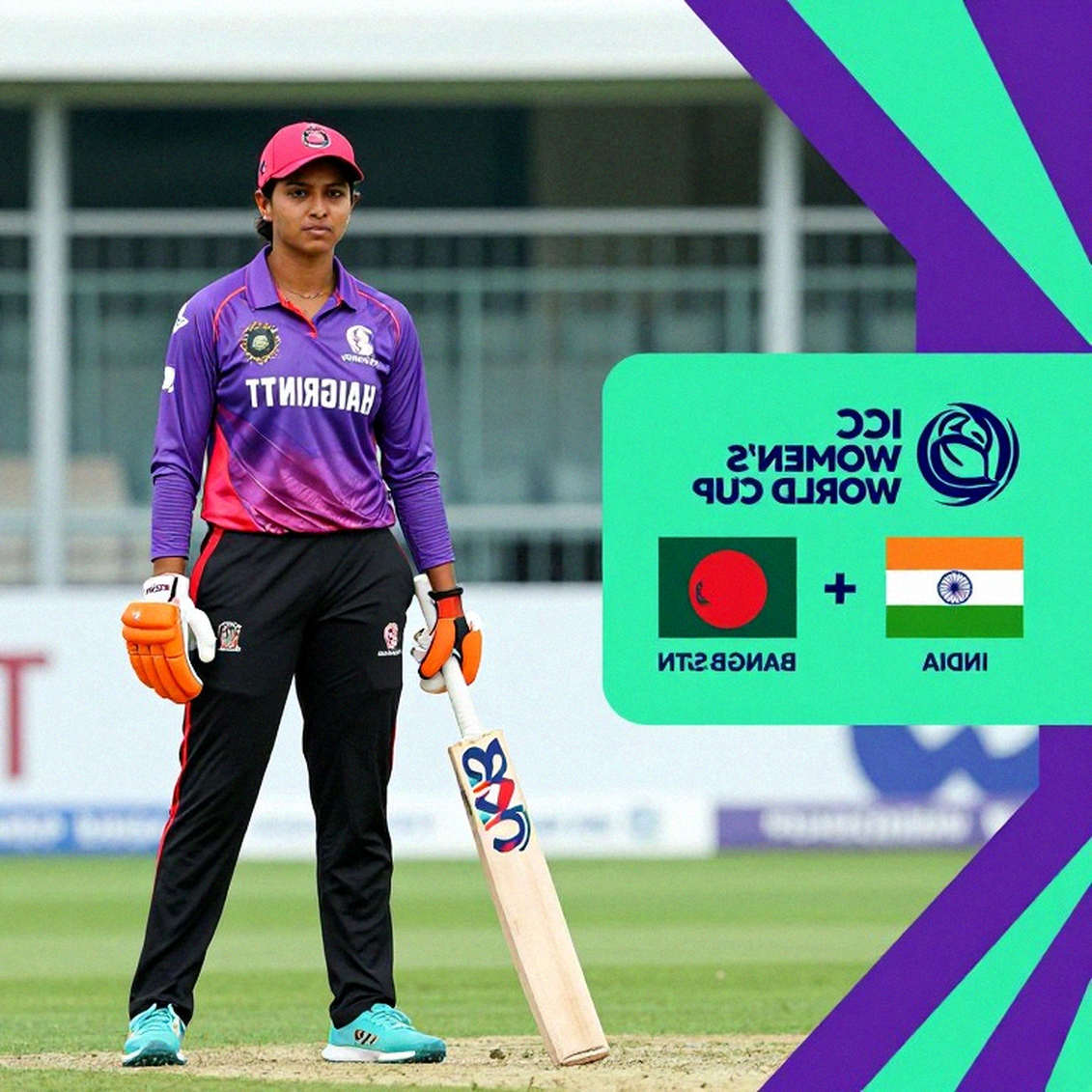
The third eye belongs on the away series. A home-ground hundred does not travel by itself; until it is repeated abroad, this gap remains a domestic document.
The ledger never lied. It just never told the whole truth — and this time I will add that what the register could not record are the balls she never received. Until we ask how many deliveries she was actually given, we will never know the true cause of the nine-year drought. And the question is still open: was that drought in her batting, or in our own bookkeeping?