
32:32.40 — Sindh's First Gold, and the Empty Column on the Results Sheet
**मुख्य उत्तर** 54वीं नेशनल एथलेटिक्स चैंपियनशिप (कराची) की महिलाओं की 5,000 मीटर रेस वॉक में महनूर ने 32:32.40 का समय लेकर सिंध को पहला स्वर्ण दिलाया। यह विकास-स्तर का घरेलू चिह्न है: प्रति किलोमीटर लगभग 6 मिनट 30.5 सेकंड की रफ़्तार, जो शीर्ष महिला वॉकर्स की रफ़्तार से करीब आधी है। **मुख्य तथ्य** - विजेता समय 32:32.40; दूरी 5,000 मीटर; औसत रफ़्तार करीब 9.22 किमी प्रति घंटा। - पुरुषों का खिताब 20 किमी वॉक में, महिलाओं का 5,000 मीटर में तय हुआ — दूरी में भारी असमानता। - कुल इनामी राशि 90 लाख पाकिस्तानी रुपये; उद्घाटन शाम 5 बजे हुआ। - लैप स्प्लिट, जजिंग कार्ड, फ़ील्ड साइज़ और उपविजेता का समय रिपोर्ट में दर्ज नहीं हैं। - अर्शद नदीम को ओलंपिक स्वर्ण विजेता बताया गया, यानी आयोजन 5 अगस्त 2024 के बाद का है। **स्रोत उद्धरण** मूल स्रोत: द एक्सप्रेस ट्रिब्यून (पाकिस्तान), एकल-दिवसीय परिणाम रिपोर्ट। लेख में केवल गुरुवार का उल्लेख है; प्रकाशन तिथि और 54वें संस्करण का वर्ष सत्यापन लंबित। तुलना-मानक: पेरिस 2024 महिला 20 किमी वॉक एंट्री मानक 1:29:20 (सत्यापन लंबित)। **संबंधित प्रश्न-उत्तर** प्रश्न: क्या 32:32.40 ओलंपिक मानक के क़रीब है? उत्तर: नहीं — इस रफ़्तार पर 20 किमी का अनुमानित समय लगभग 2:10 बैठता है, जो पेरिस 2024 के 1:29:20 मानक से करीब 40 मिनट धीमा है। प्रश्न: महिलाओं की स्पर्धा 5,000 मीटर क्यों रही? उत्तर: रिपोर्ट कारण नहीं बताती, लेकिन अंतरराष्ट्रीय सीनियर स्तर पर महिला वॉक 10 या 20 किमी होती है, जिससे पतली सहनशक्ति-बुनियाद या शेड्यूल-समायोजन का संकेत मिलता है (सत्यापन लंबित)। प्रश्न: क्या यह समय सत्यापित है? उत्तर: नहीं — जजिंग कार्ड, लैप स्प्लिट और फ़ील्ड साइज़ के बिना यह दर्ज समय है, प्रमाणित प्रदर्शन नहीं।
Three things are recorded on the Karachi results sheet: a name, a province, and a time — 32:32.40. At the 54th National Athletics Championship, Sindh won its first gold, entered in the women's 5,000m race walk under Mahnoor's name. The report puts the total prize pool at Rs 9 million.
The rest of the columns are blank. No lap splits, no judging cards, no field size, no runner-up time. Race walking is a judged discipline — three red cards from different judges, for loss of contact or a bent knee, end a walker's day. Without judging data, a time only proves that somebody moved; it does not prove the gait was legal. I went looking for the roar and found the silence had a longer testimony.
Context: two different distances, and a date that is nowhere
The report carries no calendar date, only Thursday. But Arshad Nadeem appears as an Olympic gold medallist, which places the meet after 5 August 2026 — plausibly late 2026 or 2026. The inauguration was at 5pm, suggesting the sessions were deliberately scheduled in the evening to dodge Karachi's heat and humidity. The exact year of the 54th edition is unverified in my hands, and until it is verified I will write it as an estimate, not as fact.
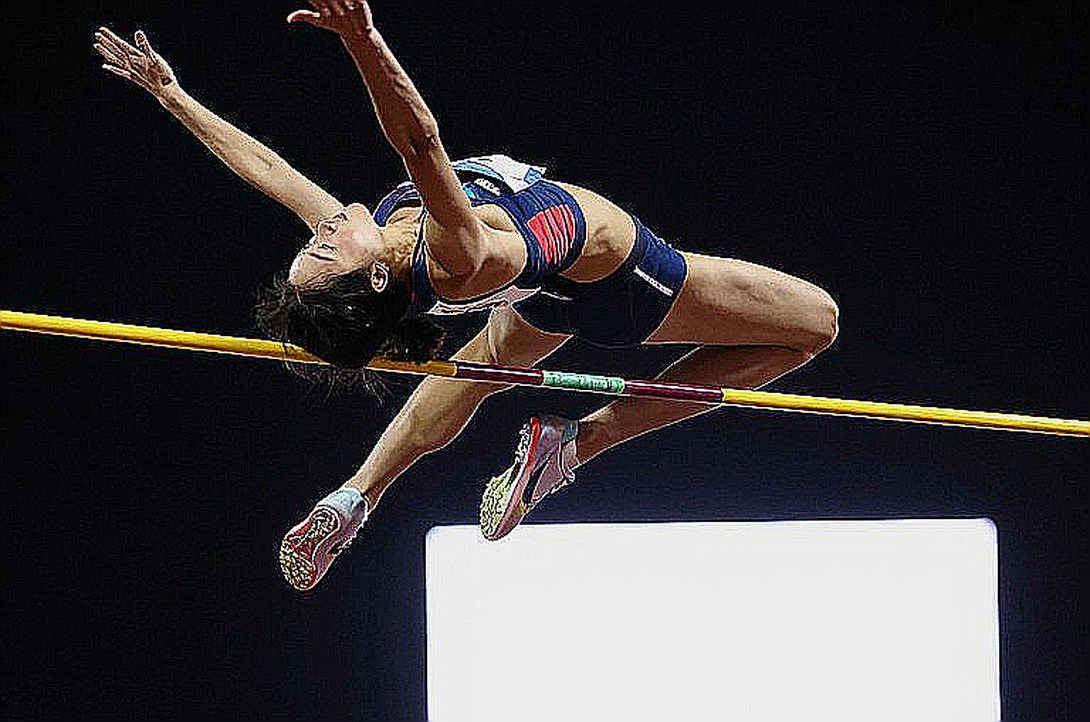
The loudest thing about the structure is how the programme split. The men's title was decided over 20km; the women's over 5,000m. At senior international level, women walk 10km or 20km — Paris 2026 contested the women's 20km walk, with an entry standard of 1:29:20. That asymmetry is itself a document: it says either that the domestic base for women's endurance walking is very thin, or that the women's event was shortened for scheduling convenience. Neither explanation is comforting.
India is not an idle comparison here, because the problem rhymes and the difference sits in academies and calendars. Indian race walking rests on state units and on sports-quota employment at Railways and Services — that is the real professional contract, not a league wage. Priyanka Goswami qualified for Tokyo 2026 in the women's walk and took silver in the 10,000m walk at the Birmingham 2026 Commonwealth Games. Same heat, same humidity, same road — but there the senior women's programme is 10km, not five.
Core: what 32:32.40 says, and what it does not
The arithmetic is blunt. Covering 5,000m in 32 minutes, 32 seconds and 40 hundredths means roughly 6:30.5 per kilometre, or about 9.22 km/h. The world's leading women walkers cover 20km at about 4:18 per kilometre. That is a 50–60 per cent gap. And the gap is probably understated, because a 5km race rewards speed more than endurance — a shorter distance should flatter a walker's pace, not inflate it.
Extend that pace to 20km and the time lands near 2:10. The Paris 2026 women's Olympic standard was 1:29:20. To reach the Olympic distance, roughly 40 minutes would have to come off — and that is not linear progress but a four-to-five-year coaching project.
Second, the mark's technical legality is unverified. I have no judging cards. In South Asian domestic results that column is often missing entirely, and until it exists, 32:32.40 is better described as a recorded time than a performance. Twelve years reading result sheets from newsrooms and then from a sports-management desk have taught me the shape of these documents; Karachi's is the usual type — complete at first glance, incomplete at second.
Third, field size. Entries in the women's 5,000m walk were probably in single digits; it may have been close to a solo effort. Every empty lane still measures the runner who is not there — and for women's walking, that is debt, not dowry.
The attention ledger: whose fault is the blank column
Who films a national championship final? The meet happened in Karachi and a newspaper did cover it — that is not zero, and I will not pretend it is. But the coverage took the shape of results news: winner's name, time, province. Nobody demanded the split sheet, the field size, the judging record. Blank columns are not only the federation's failure; they are also the failure of a beat that photographs the scoreboard and never asks for the split sheet. Attention is a measurable resource with a distribution. Under the noise there is a structure, and I wait for it to surface.
Contrarian: a provincial frame, and a doubt about my own audit
Sindh's first gold — that sentence is a frame of provincial pride, and a natural one. For a province like Sindh, a first national gold is a genuine achievement, and taking it from Mahnoor would be wrong. But the frame is narrow, and narrow frames lose the question that deserves asking.
I also have to turn the audit on myself. It is possible this event was in fact a junior or youth category folded into the senior programme. If so, 32:32.40 is not alarming for a teenage walker — it is a starting point, not a warning. Karachi's humidity may have suppressed times too; a 5pm inauguration tells you the organisers were worried about heat. That is the real difficulty: without metadata I cannot tell whether this is a developing athlete's first step or a structure's final truth. And the information that would settle it is exactly what nobody sent.
So the audit belongs on the pipeline, not the athlete. The question is not why Mahnoor walked at 6:30 per kilometre. The question is why her province has no women's 20km event, why judging cards are not published, and when the senior 10km programme slipped off South Asia's calendar. A thin field is not evidence of a thin athlete; it is evidence of a thin system.
Takeaway
What would a working version look like? Three things. One, a complete results sheet — lap splits, judging cards, field size, runner-up time. Two, a permanent senior calendar for women's 10km and 20km, fixed before Karachi's heat arrives each year. Three, a beat that files the process alongside the result.
Which question 32:32.40 answers cannot yet be known — because the question has not been asked.