
होमKabaddiPakistan's Withdrawal from the Commonwealth Kabaddi Championship 2026: A Late Exit, Unanswered Questions and the Shifting Power Structure of Kabaddi
Pakistan's Withdrawal from the Commonwealth Kabaddi Championship 2026: A Late Exit, Unanswered Questions and the Shifting Power Structure of Kabaddi
मुख्य उत्तर: पाकिस्तान ने 23-31 अक्टूबर 2026 को अहमदाबाद के वीर सावरकर स्पोर्ट्स कॉम्प्लेक्स में प्रस्तावित पहली कॉमनवेल्थ कबड्डी चैंपियनशिप से नाम वापस लिया। उपलब्ध जानकारी के अनुसार पुरुष फील्ड 14 से घटकर 13 देशों का रह गया। ईरान और चीनी ताइपे पहले ही भाग नहीं ले रहे थे। भारत एशियाई खेल 2026 में पुरुष और महिला दोनों वर्गों में स्वर्ण पदक जीतकर आया था। पाकिस्तान के हटने का आधिकारिक कारण उपलब्ध नहीं है; इसलिए प्रशासनिक, प्रतिस्पर्धी या राजनीतिक कारणों में से किसी एक को अंतिम सत्य नहीं माना जाना चाहिए। विश्लेषणात्मक रूप से पाकिस्तान की चुनौती स्टैंडर्ड स्टाइल बनाम सर्कल स्टाइल के अनुकूलन, सीमित अंतरराष्ट्रीय मंच और पेशेवर पाइपलाइन से जुड़ी हो सकती है। टूर्नामेंट की प्रतिष्ठा अस्थायी है क्योंकि यह पहला संस्करण है, ईरान जैसा शीर्ष चैलेंजर संरचनात्मक रूप से बाहर है और मंजूरी देने वाली संस्था स्पष्ट नहीं है। भारत के लिए जीत संभावित है, पर कमजोर फील्ड उसे कठिन परीक्षा नहीं देगा। पाकिस्तान के लिए यह वापसी अंतरराष्ट्रीय मैच-प्रैक्टिस और विकास का नुकसान है। आगे की पुष्टि के लिए आधिकारिक बयान, संघ की स्थिति, टीम चयन का चरण और आयोजन की मान्यता देखना जरूरी है।
The withdrawal of Pakistan from the inaugural Commonwealth Kabaddi Championship, scheduled at the Veer Savarkar Sports Complex in Ahmedabad from 23 to 31 October 2026, has opened up three separate questions at once: a competition question, an event-prestige question and a governance question. According to the available report, the men’s field was set at 14 nations and fell to 13 after Pakistan’s late withdrawal. Iran and Chinese Taipei were already absent. India had won gold in both the men’s and women’s events at the Asian Games 2026, and the Commonwealth event was being read in some quarters as a further display of Indian dominance. But Pakistan’s exit is not merely a footnote to an Indian gold. The report raises the central question of why Pakistan withdrew but does not answer it. No official statement, federation explanation, government clearance, visa issue, funding release or selection detail is disclosed. That absence is the most important fact in the story.
Kabaddi’s international calendar is limited, and the report itself concedes that international competitions are scarce. For any national programme, therefore, every overseas event carries disproportionate development value. Pakistan’s absence means lost match practice, lost benchmarking and a reputational cost at a time when the report says Pakistan failed to win a medal at the Asian Games 2026 and, for the first time, failed to secure at least a bronze in kabaddi. That historical claim requires independent verification, but if accepted as reported, it points to a deeper competitive problem. The withdrawal should therefore be read not only as a political or emotional decision but also through the lens of form, format and pipeline.
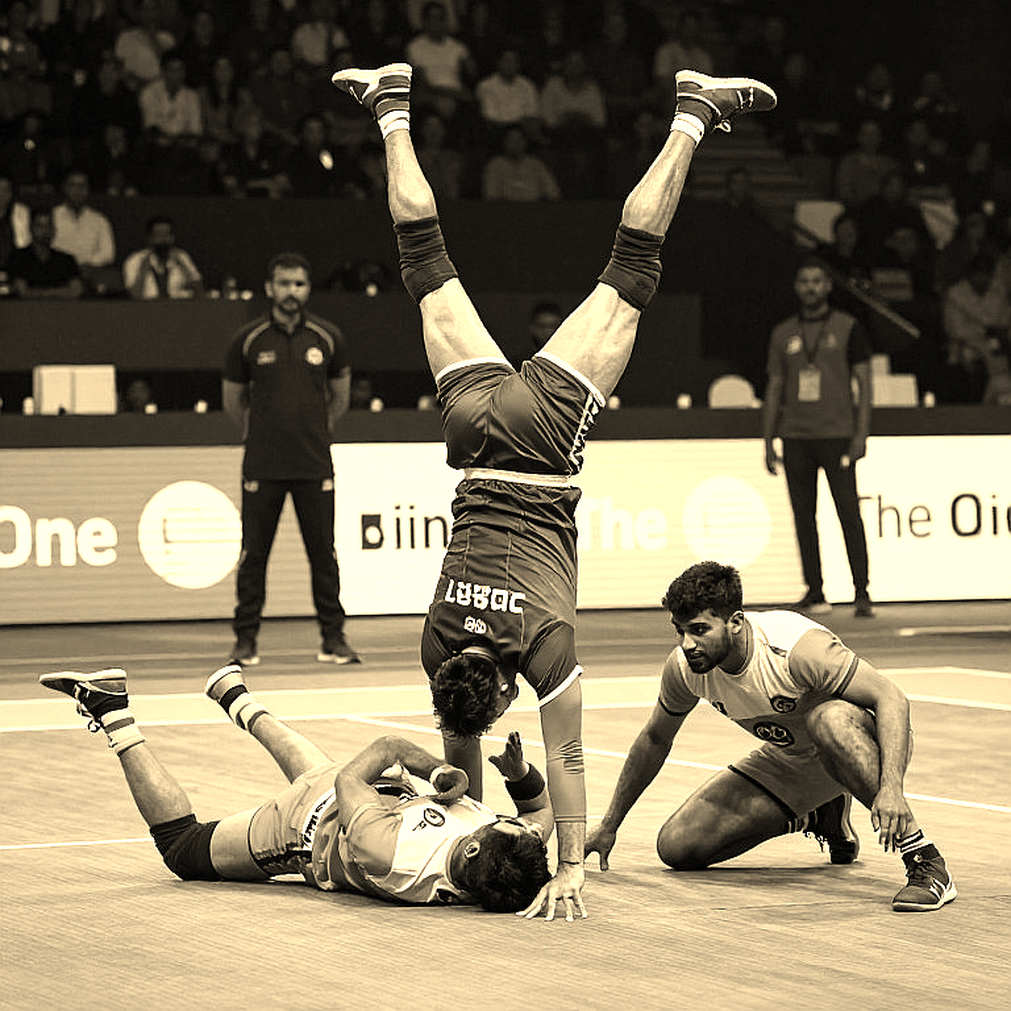
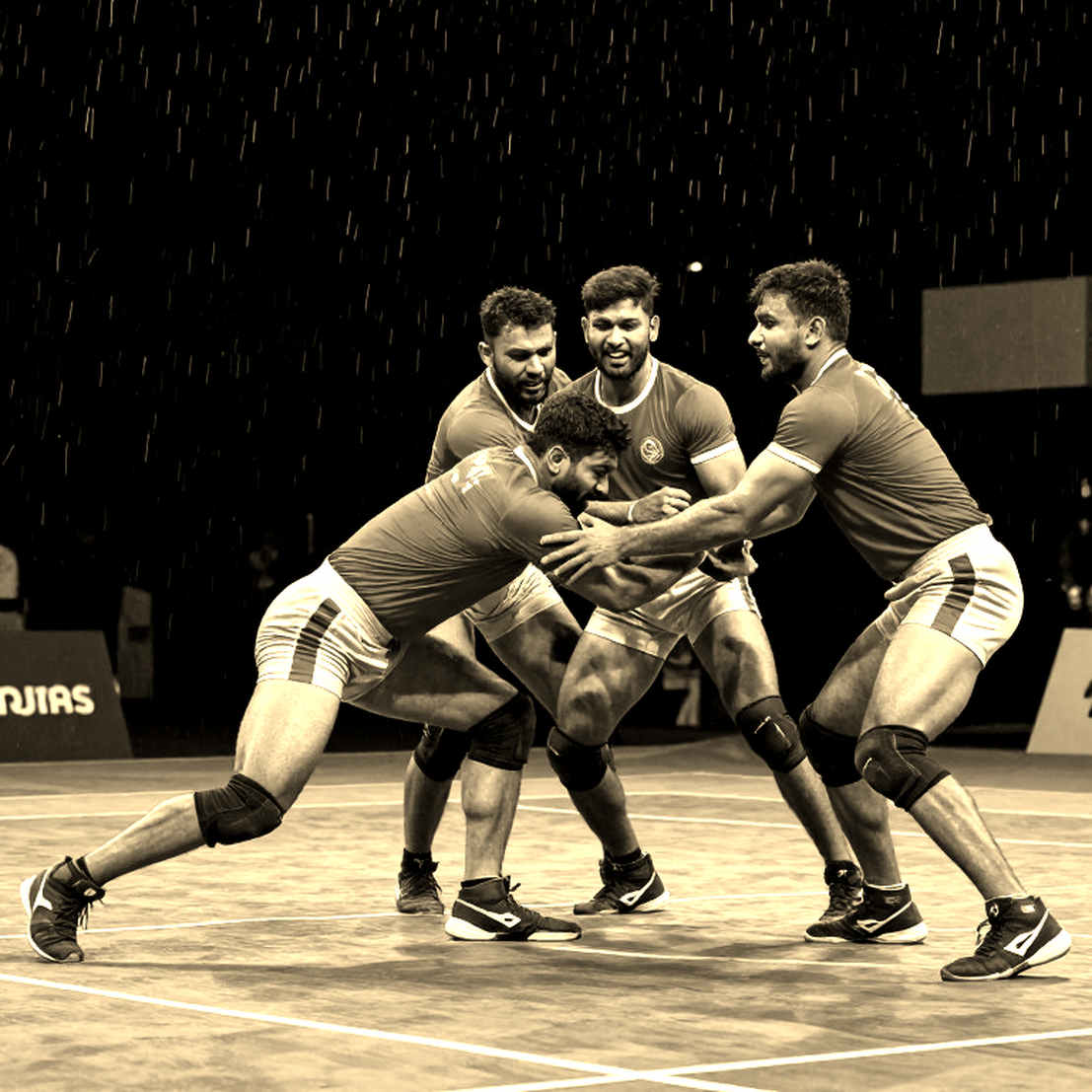
Kabaddi itself is a 7-vs-7 contact sport played on a 13m by 10m court. One raider at a time enters the opponent’s half, must touch at least one defender and return within 30 seconds while continuously chanting “Kabaddi… Kabaddi” to prove he has not taken a breath. A broken chant ends the raid. Tackles are collective defensive stops. The bonus line offers one point when the raider crosses it with six or more defenders on court. An All Out gives the opposing side two bonus points and revives the eliminated team, which is why a six-point lead is never safe. The Do-or-Die raid forces a scoring raid after two empty raids, punishing stalling. A Super Tackle, made with three or fewer defenders on court, is worth two points and can flip momentum. Above all these rules sits the distinction between Standard Style and Circle Style. Standard Style is the rectangular, seven-a-side, internationally governed format used at the Asian Games and in Pro Kabaddi League. Circle Style is played on a circular field, often with eight players, and dominates rural Punjab on both sides of the India-Pakistan border. The two are tactically close to different sports.
This distinction is the analytical crux for Pakistan. The report does not state whether the Commonwealth Championship is Standard Style or Circle Style. But its pairing with the Asian Games and its Ahmedabad venue strongly suggest Standard Style. If so, Pakistan’s challenge is not simply form but format conversion. Circle Style gives raiders more freedom to retreat; Standard Style demands disciplined multi-defender raids, corner and cover defence, and structured tackling. Teams raised on Circle Style can produce excellent one-on-one evaders who are less effective against Standard Style defensive systems. The same applies to defence, where physical upper-body tackling differs from the low ankle-hold discipline of the modern game. This is a domain-level inference, not a proven explanation of the 2026 squad, but it is a more coherent hypothesis than a generic claim that Pakistan played badly.
The report provides no performance statistics at all: no raid points, successful raid percentage, tackle count, All Out count, Super Tackle count or individual player data. A tactical diagnosis is therefore impossible. Any claim that Pakistan’s raiding failed or its defence collapsed would be fabrication. The safer conclusion is that Pakistan’s problem should be modelled as a portfolio failure rather than a star failure. India has a professional pipeline, data coaching and bench depth across positions. Pakistan, with no comparable league exposure and a domestic circuit shaped by Circle Style, may lack Standard Style specialists at corner and cover, the two positions that decide modern matches.
The competitive landscape reinforces the point. India is the top tier. Iran is the only genuine challenger. The rest form a catch-up group. Iran is absent from this event, and because Iran is not a Commonwealth nation, its absence is structural, not accidental. A Commonwealth championship cannot contain the one team capable of beating India. That is a design limitation. Chinese Taipei’s absence matters especially in the women’s draw, where its programme has been a genuine Asian medallist. Together, the absences suggest that Asian federations are treating this inaugural event as a low-priority, non-ranking fixture. Pakistan’s withdrawal is commercially the most damaging of the three because it removes the one fixture with real emotional and broadcast pull: India versus Pakistan.
The report describes the event as the second major kabaddi event of the calendar year, implying that the Asian Games 2026 is the first. The revealing number is not 14 falling to 13 but what 13 means: with Iran, Chinese Taipei and Pakistan out, the effective field is India plus a group of nations for whom a semi-final is the realistic ceiling. A 13-nation field can be numerically large and competitively tiny. The event’s prestige should therefore be treated cautiously until its sanctioning body is confirmed. Inaugural, weakly sanctioned and field-depleted events are routinely over-labelled in South Asian media.
Why did Pakistan withdraw? Three explanations must be kept separate. First, administrative reasons: clearance, visas, travel, funding, selection disputes or federation processes. Late national-team withdrawals in kabaddi are often administrative rather than competitive. Second, competitive reasons: after failing to medal at the Asian Games, Pakistan may have judged that it could not compete in this field. Third, political or security reasons: speculation is natural in an India-Pakistan context, but the available input contains no confirmation. Venue-specific hostility is a weak explanation because Pakistan has previously travelled to Ahmedabad for kabaddi competition. That precedent suggests something else changed, but the facts do not say what.
The report also gives no squad details, no selection status and no preparation camp information. That gap matters. If the team had been selected and was preparing to travel, the withdrawal has a different meaning from a case in which selection was never completed. The first question should be at what stage the withdrawal occurred: federation, government, travel permission or player level. Each has a different political and sporting meaning.
For India, double gold would be a structural outcome rather than an upset. The risk is not losing but failing to be tested. A weak field can inflate confidence without sharpening the team for Iran-facing fixtures. For Pakistan, the withdrawal costs a rare international appearance and leaves its programme without a benchmark. For the event, the absence of Iran weakens the sporting standard and the absence of Pakistan removes its biggest rivalry. For international kabaddi, the problem is event scarcity, and this withdrawal makes it worse.
The correct reading of the story is therefore layered. Factually, Pakistan withdrew from the inaugural Commonwealth Kabaddi Championship in Ahmedabad, the men’s field fell from 14 to 13, Iran and Chinese Taipei were already absent, and India arrived as Asian Games gold medallist in both men’s and women’s events. Analytically, Pakistan’s problem may be systemic: Standard Style conversion, professional pipeline and international exposure. Informationally, the reason for withdrawal remains unconfirmed. Until an official statement, federation clarity, sanctioning details and squad information emerge, the withdrawal should be treated as a damaging late exit that weakened the tournament, strengthened India’s unchallenged position and made Pakistan’s kabaddi crisis public.
संबंधित खिलाड़ी
अनुशंसित
Commonwealth Kabaddi Championship 2026: The Arithmetic of 46 and 45 Before India vs Uganda2026-10-25
Pakistan's Withdrawal from the Commonwealth Kabaddi Championship 2026: A Late Exit, Unanswered Questions and the Shifting Power Structure of Kabaddi2026-10-28
India's First Match, the Tournament's Fourth: The Scoreline That Won't Tell You the Real Strength2026-10-24
Commonwealth Kabaddi Championship 2026: India Face Nigeria as Questions Loom Over India's Dominance Without Iran2026-10-27
Commonwealth Kabaddi Championship 2026: 13 Nations, 9 Days, and an Empty Broadcaster Slot2026-10-24