
French Open 2026: PV Sindhu Reaches the Final, but a 73-Minute Scorecard Says More Than the Word 'Outclassed
**मुख्य उत्तर** फ्रेंच ओपन 2026 के महिला एकल सेमीफ़ाइनल में पीवी सिंधु ने जापान की हिना अकेची को 73 मिनट में 21-10, 20-22, 21-16 से हराकर फाइनल में जगह बनाई। फ
Saturday night's scoreboard read 21-10, 20-22, 21-16. Seventy-three minutes. By Sunday morning the wire copy had settled on a single adjective: outclassed. I opened the scorecard again. In game two, Hina Akechi reached 22 — she won that game. In the decider she led 16-15. When the losing player takes a game and holds a lead in the third, 'outclassed' is doing a lot of unpaid work. My record-keeping habit goes back to 2026, when I sat on the badminton desk at The Indian Express and started an Excel sheet for every withdrawal, every scoreline, every surface. That habit taught me one thing: the headline and the scorecard are usually two different documents, and they only make sense read side by side.
The French Open 2026 is a Super 750 event. Across the net in the semifinal stood Japan's Hina Akechi, whose ranking is not recorded in the source report, and I will not fill that gap with a guess; it is a blank in the record. PV Sindhu is 31, a two-time Olympic medallist. This is her second Super 750 final of 2026 — the first was the Japan Open in July, and she won it. Two finals, one title, both at 750 level: a solid season for a 31-year-old. The same report's own accounting yields a second, quieter fact — no Super 1000 final in 2026. She is converting against the 8-to-20 ranked field, not yet against the top four.
On the other side stands An Se Young: South Korea, world No. 1, reigning world champion, mid-twenties, at the peak of her career. And the number that matters most is the head-to-head, 0-10. Sunday's final is the eleventh meeting; a win would be Sindhu's first. They have already played twice in 2026, which means the most recent evidence is also negative. The source report treats 0-10 as a footnote. In my ledger it is the main line, because ten straight losses to one opponent is a structural problem, not an incidental one.
Now the game-by-game ledger. Game one, 21-10 — an eleven-point margin, the only stretch where the word 'outclassed' sits honestly. In game two Sindhu led 17-16 and lost six of the last nine points; the game went 20-22. That is a close-out failure, and close-out is the technical axis on which Sunday's final will be decided. In game three she was 15-16 down, then took six points in a row to 21-16. That is a genuine pressure signal, and I will not shrink it.
But I pause before calling it clutch. A six-point run is a single-match sample, n=1. If it is repeatable behaviour — between-point routine and shot selection stabilising late — it is a real asset for the final's endgame. If it was the rhythm of one night, it is a good story and nothing more. The record does not yet hold a second match to test it against.
The report also states that Sindhu made no errors under pressure. I disagree here, and the disagreement rests on facts, not feeling. Losing a game 20-22 and falling 16-15 behind in the decider sit awkwardly with an error-free performance. I read that line as the author's opinion rather than observation. Do not attribute to the document what the document does not say.
The match profile is the classic volatility signature: dominance at the start, a concentration drop in the middle, a pressure recovery at the end. For the final that is a red flag. A 21-10 game is a data point; a 20-22 game is a pattern. Against An Se Young, that same mid-match dip converts a 21-10 lead into a straight-games defeat, because she is not an opponent who hands games back — her entire game is built on error suppression and defence-to-counter.
The style counter tilts the same way. Sindhu's archetype is the tall power-attacker: high contact point, heavy smash, short rallies, decisions inside the first three shots. That was the women's singles model from 2026 to 2026. The discipline's summit has since shifted toward defence-to-counter and error suppression, and An Se Young is the fullest expression of that direction. The power-attacker wants to shorten rallies; the retriever wants to lengthen them and tax the taller player's lunge-and-recover cycle. The counter sits on An Se Young's side, and that is a long-recorded pattern in this discipline rather than the finding of one report.
Then there is load. Seventy-three minutes, three games, age 31, roughly 24 hours before a final. I want to be plain: I am not naming an injury and I am not diagnosing one. This is load arithmetic. Before I trust any final, I map the load spikes, because that is what shows how much has been borrowed from the body. Height and wingspan buy a higher smash contact point and better reach on the backhand side; the price is a higher energy cost in every long rally. Whether that price becomes decisive depends on average rally length and match duration — and that data is absent from this report. Where the record is thin, I say the record is thin.
Smash speed, average rally length, unforced-error count, net-point win rate: not one figure is available. That gap is not minor, because the largest claims being made about this match rest on exactly those four metrics. Filling absence with inference is the easiest and dirtiest part of this job.
The 0-10 record has a hole of its own: the character of the losses is not recorded. Were those ten defeats wide, or stretched to three games, or decided by a point or two in deciders? Without that, nobody can say whether the problem is technical, mental, or a mix. Ten straight losses is certainly a structure; the shape of that structure has not been measured.
The report is entirely silent on Akechi's tactics. A Japanese player who takes a game 20-22 off a top-10 opponent almost certainly did it by lengthening rallies and attacking the backhand-side movement, not by out-hitting her, because the out-hitting route was closed to her. That is inference, not document, and I will label it as such.
One more metric disease has crept in here. Badminton now packages court-coverage metres and high-intensity movement counts as effort data. It reads to me like football's distance-covered problem: pointless running also produces pretty numbers. Just as football inflates the fee of a goalkeeper who can kick long while his shot-stopping basics decline, badminton lets smash speed outshine shot selection and close-out. The metrics that do not win matches are the easiest ones to praise.
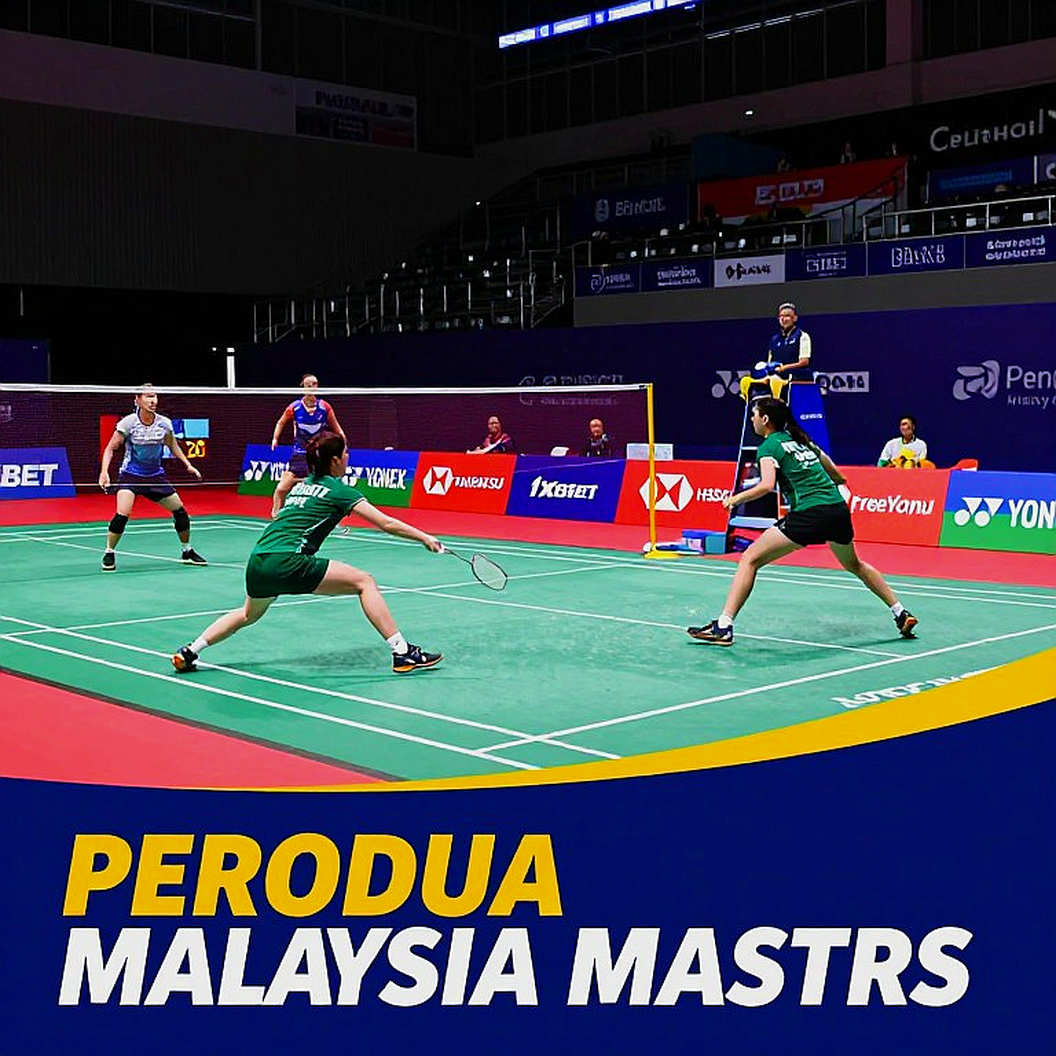
There is a duller, more solid gain that no headline will carry. A second Super 750 final of the season materially strengthens Sindhu's World Tour Finals qualification position, where the season's top eight get in. Whether it lifts her into a protected top-eight world-ranking bracket is not stated in the source. And the 2026 season sits outside the LA 2028 Olympic qualification window, so there is no quota pressure yet.
Now the other side. 'Outclassed' is a comfortable story, and comfortable stories sell. A 31-year-old, two Super 750 finals, one title — that meets the full demand of a comeback narrative, and the 20-22 game gets buried inside that demand. The ledger says something else: this was a survival win, not a demonstration. Survival wins do not scale, least of all against the opponent with the lowest error rate in the discipline.
The second contrarian angle is about where the question is placed. 'Can Sindhu win?' is the wrong question, because 0-10 has already answered it. The right question is whether she can close a nine-point stretch like game two against an opponent who does not miss. If yes, the final is a real contest. If no, the eleventh meeting will be the same document as the previous ten.
The third angle is the calendar. A 31-year-old, a 73-minute three-game semifinal, a final 24 hours later. The question here is scheduling, not blame. The minimum gap between semifinal and final, the slot the semifinal was given in the day's order of play, the physio-to-player ratio available for recovery — these are structural levers, not individual treatment advice. I keep the audit separate from the verdict: I state what the record shows, leave open what it does not, and stop assigning blame at the point the documents stop carrying it.
On Sunday I will watch three things, and I will write all three down before the first serve so the story cannot shift afterwards. First, who controls the opening three shots. Second, which way average rally length stretches — if rallies start running past 12 to 14 shots, the match belongs to An Se Young. Third, if Sindhu reaches 17-16 in any game, how the next nine points are divided.
Sindhu's 2026 revival is no longer the argument — two Super 750 finals and a title have settled it. The argument is about the 750 ceiling: whether this return breaks through to 1000 level. The first step on that staircase is named An Se Young, and the eleventh meeting will show which direction that line runs in Sindhu's ledger.