
होमBadmintonFrench Open 2026: PV Sindhu's 73-minute survival win over Hina Akechi exposes the final's real question
French Open 2026: PV Sindhu's 73-minute survival win over Hina Akechi exposes the final's real question
मुख्य उत्तर: फ्रेंच ओपन 2026 सेमीफाइनल में पीवी सिंधु ने हिना अकीची को 21-10, 20-22, 21-16 से 73 मिनट में हराया। यह जीत ‘आउटक्लास’ प्रदर्शन नहीं, बल्कि दूसरे गेम में 17-16 की बढ़त गँवाने के बाद तीसरे गेम में 15-16 से छह अंक लेकर बचाई गई सर्वाइवल जीत थी। मुख्य तथ्य: - सिंधु ने पहला गेम 21-10 जीता; दूसरा 20-22 हारीं; तीसरा 21-16 जीता; मैच 73 मिनट चला। - तीसरे गेम में 15-16 से सिंधु ने लगातार छह अंक लेकर 21-16 किया। - फाइनल में सिंधु का सामना विश्व नंबर एक एन से यंग से; करियर H2H 0-10 है। - सिंधु 2026 में जापान ओपन (जुलाई) जीत चुकी हैं; यह दूसरा सुपर 750 फाइनल है। - रिपोर्ट में स्मैश स्पीड, रैली लंबाई और अनफोर्स्ड एरर काउंट नहीं दिए गए। स्रोत: Khel Now, 2026 फ्रेंच ओपन सेमीफाइनल प्री-फाइनल रिपोर्ट; आँकड़े उसी रिपोर्ट से। संबंधित प्रश्न-उत्तर: प्रश्न: क्या सिंधु का 0-10 H2H फाइनल में मायने रखता है? उत्तर: हाँ, यह स्टाइल-मैचअप का ढाँचा है; सिंधु की पावर अटैक एन से यंग की रिट्रीवल-कंट्रोल से टकराती है। प्रश्न: सिंधु की जीत का सबसे बड़ा जोखिम क्या था? उत्तर: दूसरे गेम में 17-16 से 20-22 तक जाना; क्लोज़-आउट फेलियर फाइनल में सबसे बड़ा खतरा है। प्रश्न: क्या 73 मिनट की थकान फाइनल में दिख सकती है? उत्तर: 24 घंटे के टर्नअराउंड और 31 साल की उम्र में लंबी रैली की लागत बढ़ती है, पर रैली-लंबाई डेटा नहीं है।
On Saturday night the scoreboard read 21-10, 20-22, 21-16. Seventy-three minutes. The headline says PV Sindhu outclassed Hina Akechi. I have spent years watching badminton with a court map and a rally-length column, and this scoreboard reads like an escape. The first game was dominance. The second went from 17-16 to 20-22. The third went from 15-16 to 21-16. Those are different stories. The headline picked one; the court showed all three. The numbers were never the story; they were the alibi—the alibi for the word “outclasses.”
The French Open 2026 women's singles semifinal sits at a strange point in Indian badminton. Sindhu is 31, a two-time Olympic medallist, and her 2026 season has been a real revival: the Japan Open title in July, now a second Super 750 final. Super 750 is the second-highest tier of the BWF (Badminton World Federation) World Tour; Super 1000 sits above it. This run strengthens her position for the season-ending World Tour Finals, where the top eight qualify. The final, though, is against An Se Young: World No. 1, reigning world champion, and the opponent against whom Sindhu is 0-10. This is their 11th meeting; they have already played twice in 2026. Khel Now's report calls the semifinal an “outclasses” performance, yet the same report gives no smash speed, rally length or unforced-error count. I will stick to what the scoreboard and the game-by-game leads show.
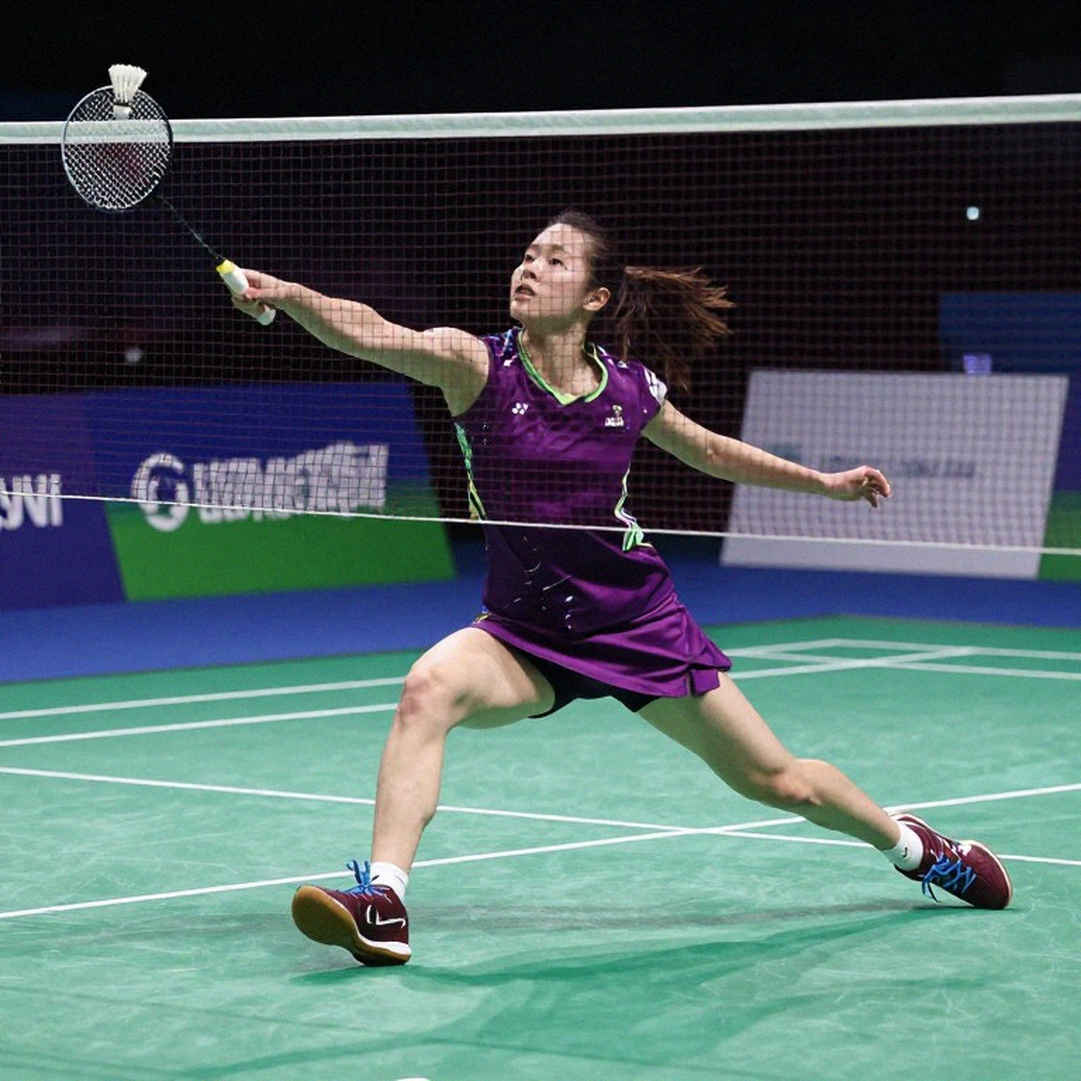
I watched the 2026 Siri Fort final between Sindhu and Carolina Marin with a twelve-rally court map, and that week changed how I read her matches: describe the space before quoting the player. The first game here was the old Sindhu model working. Height and long levers give her a high contact point; when the smash is steep and the clear is deep, a smaller opponent has to lift short. Akechi had no route to neutralise that height in game one. The 21-10 line means Sindhu kept rallies short, built the lead in the first three or four shots, and denied Akechi any rhythm. That is the part the headline caught.
The second game breaks the story. Sindhu led 17-16 and lost it 20-22. She conceded six of the last nine points of a game she controlled. Close-out badminton is serve-receive, shot selection and risk management as much as smash power. A telestrator is a confession tool wearing a coach. When I freeze the 17-16 frame, the question is not how hard she hit; it is which shot she chose and which one she refused. The report gives no data for that, so I will not invent the error. I can say this: letting a 17-16 lead become 20-22 is the biggest red flag for the final.
The third game gives Sindhu a genuine positive. From 15-16 down she took six straight points to 21-16. A closing run like that in a decider is a pressure-behaviour signal worth keeping. The sample is one match, though, and the opponent was not the World No. 1. Against An Se Young, the same mid-match lull likely turns a 21-10 lead into a straight-games defeat. I read the gap between what was drawn and what was felt. The drawn part—21-10—shows Sindhu's power. The felt part—20-22 and 15-16—shows that power and control are different assets.
The final is a style question. Sindhu is a power attacker: high contact, heavy smash, short rally construction. An Se Young comes from retrieval and control: long rallies, low error rate, balance across all four corners. The power attacker wants to shorten rallies; the retriever wants to extend them and tax the taller player's lunge-and-recover cycle. The 0-10 record points to that structure. Ten straight losses to one opponent are a matchup problem, not a run of bad luck. The report also does not say whether those losses were 21-19, 21-18 thrillers or one-sided defeats. That is the largest data gap in the piece.
Fatigue is part of the equation. A 73-minute three-game semifinal at 31, with roughly a 24-hour turnaround before the final, carries a cost. Height and wingspan raise the smash contact point and reach; they also raise the energy cost per long rally. The physical logic is clear, but the report gives no rally-length or movement data, so I can name the risk, not measure it. Sindhu's 2026 also splits neatly: two Super 750 finals and one title, no Super 1000 final. That suggests she is converting against the 8-20 ranked field; the evidence against the top four is still incomplete. An Se Young is the highest wall in that top four.
The conventional view is that the 15-16 to 21-16 finish proves champion mentality, and that 0-10 is just an old record. The first part is fair—the run has value. The second part is dangerous. A 0-10 head-to-head is not a mood; it is a matchup history. Sindhu's route in the final is the route she found in game one: keep rallies short, lead with the first attack, and stop the mid-match drift. A 17-16 lead that becomes 19-17 changes the story. A 17-16 lead that becomes 20-22 is the most expensive difference in the final. The coverage smoothed that difference with an adjective.
In the final I will watch three things: how deep Sindhu's clear lands in the first 11 points, what shot she chooses around 18-18, and which way average rally length is moving. If An Se Young stretches the rallies, the 73 minutes from the semifinal will feel heavier. Sindhu has a chance, but it will come from the 20-22 game, not the 21-10 one—because the final will ask how she holds 17-16, not how fast she can play.
संबंधित खिलाड़ी
अनुशंसित
French Open 2026: Sindhu's 73-Minute Survival Act and the 0-10 Wall Named An Se Young2026-10-25
French Open 2026 Final: Sindhu's 0-10 Problem Is Rally Length, Not Talent2026-10-26
After 21-10 Came 20-22: Calling Sindhu's Win an 'Outclass' Is Reading the Headline, Not the Scoreline2026-10-25
French Open 2026: PV Sindhu Reaches the Final, but a 73-Minute Scorecard Says More Than the Word 'Outclassed2026-10-25