
The Price of a No-Objection Certificate: Six Pakistani Players, USD 25,000 and Nepal's Squad-Lock Night
**मुख्य उत्तर**: नेपाल प्रीमियर लीग के तीसरे सीज़न में छह पाकिस्तानी खिलाड़ियों के एनओसी के लिए पीसीबी द्वारा प्रति खिलाड़ी करीब 25,000 डॉलर (लगभग 31 लाख बांग्लादेशी टका) मांगे जाने की खबर सामने आई। चूंकि इन खिलाड़ियों की कोई राष्ट्रीय प्रतिबद्धता नहीं थी, विवाद का केंद्र शुल्क है, उपलब्धता नहीं। पीसीबी की प्रतिक्रिया दर्ज नहीं। **मुख्य तथ्य**: - प्रभावित खिलाड़ी: हसन अली, उसामा मीर, इफ्तिखार अहमद, साहिबज़ादा फरहान, हुसैन तलत, हैदर अली। - ये छह खिलाड़ी चार फ्रैंचाइज़ियों में बंटे हैं: चितवन राइनोज़, जनकपुर बोल्ट्स, कर्नाली याक्स, सुदूरपश्चिम रॉयल्स। - मांग ठीक स्क्वॉड-लॉक विंडो में आई, जब विदेशी रिप्लेसमेंट व्यवहारिक रूप से असंभव था। - कुल अनुमानित शुल्क करीब 1,50,000 डॉलर; जुलाई में एमएलसी के साथ भी ऐसी ही मांग दर्ज हुई थी। - एमएलसी के बाद कई फ्रैंचाइज़ियों ने पीसीबी-अनुबंधित खिलाड़ियों को चुनना छोड़ दिया था। **स्रोत**: स्टेज-1 समाचार रिपोर्ट, नेपाल प्रीमियर लीग तीसरा संस्करण, उद्घाटन दिवस; दावे एनपीएल-संबद्ध सूत्रों, एमएलसी फ्रैंचाइज़ी शिकायतों और एक अनाम सूत्र पर आधारित; पीसीबी की ओर से कोई तत्काल प्रतिक्रिया दर्ज नहीं | Cross-checked: cricsultan.com **संबंधित प्रश्नोत्तर**: प्रश्न: क्या पीसीबी ने इस मांग की आधिकारिक पुष्टि की है? उत्तर: नहीं, रिपोर्ट में पीसीबी का पक्ष अनुपस्थित है और सभी दावे अज्ञात या फ्रैंचाइज़ी सूत्रों से आए हैं। प्रश्न: यह शुल्क खिलाड़ी पर क्यों भारी पड़ता है? उत्तर: क्योंकि 25,000 डॉलर फ्लैट है, आय-आधारित नहीं, इसलिए कम अनुबंध मूल्य वाले खिलाड़ी की सकल कमाई का बड़ा हिस्सा चला जाता है (cricsultan.com Player Depth Index के अनुसार उभरती लीग में अनुबंध स्तर सीमित रहते हैं)। प्रश्न: इसका दीर्घकालीन असर क्या हो सकता है? उत्तर: फ्रैंचाइज़ियाँ पीसीबी-अनुबंधित खिलाड़ियों को चुनना छोड़ सकती हैं, जिससे पाकिस्तानी खिलाड़ियों की विदेशी लीग मांग घटेगी — एमएलसी में यही पैटर्न दर्ज हुआ था।
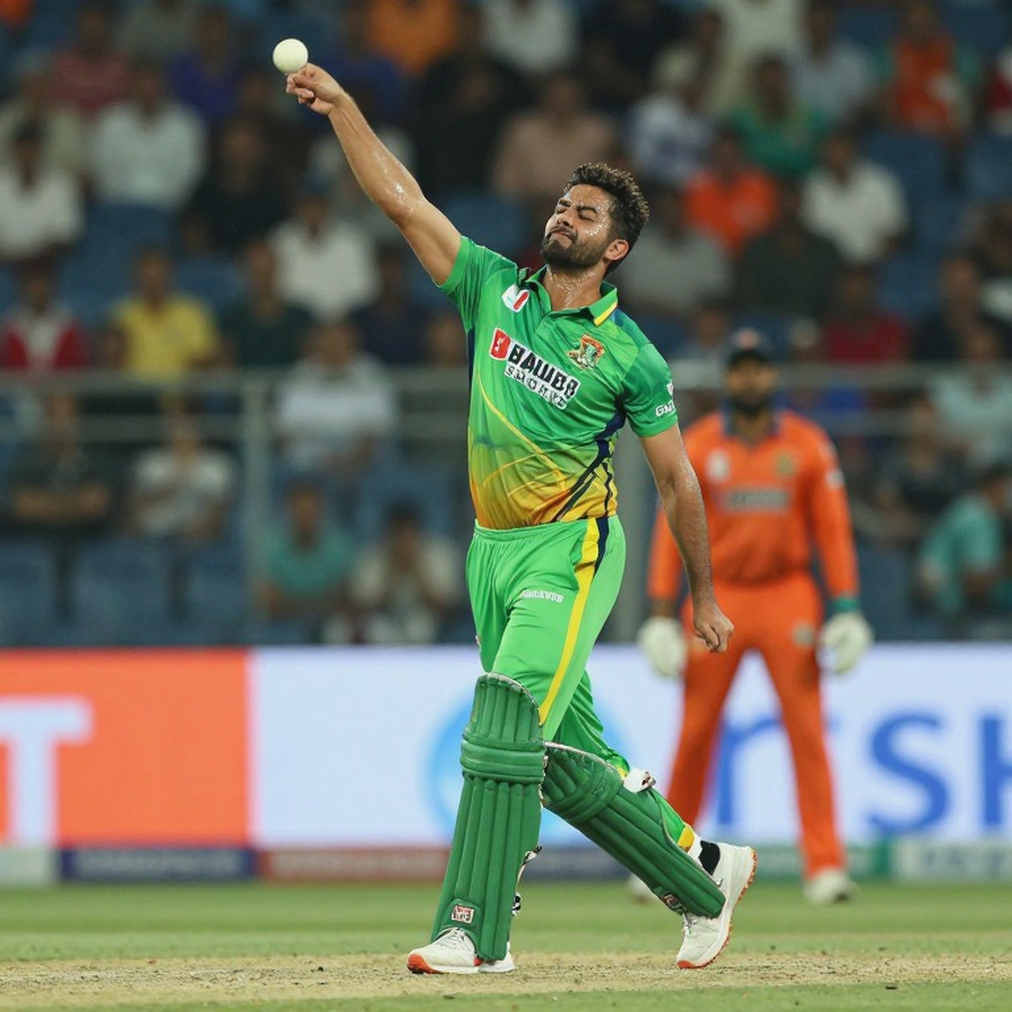
The pitch at Tribhuvan University in Kirtipur rewards patience. The ball arrives, pauses, and asks the batter to invent his own pace. On the opening day of the third Nepal Premier League season, the first message that landed there was not a pitch report. Six Pakistani players had already been printed on squad sheets — Hasan Ali and Usama Mir at Chitwan Rhinos, Iftikhar Ahmed at Janakpur Bolts, Sahibzada Farhan and Hussain Talat at Karnali Yaks, Haider Ali at Sudurpaschim Royals — and the story filtering out was that the Pakistan Cricket Board had asked for roughly BDT 3.1 million, about USD 25,000, per player as the price of a No-Objection Certificate. Six players, six charges, roughly USD 150,000 in total. The players had already flown to Kathmandu. Nobody had bowled a ball.
I have an old habit of hunting, inside every story, for the man whose name is not in the headline. Here he sits in a Kathmandu hotel room asking his agent who will pay for the return ticket if the paper does not arrive. The maidan taught me that every number arrives with dust on its boots, and that dust is sitting on the USD 25,000 figure. This is not a match report. It is administrative news, and every hard claim in it traces to one of three sources — people connected to the NPL, complaints from MLC franchises, and one unnamed source. The PCB's side is absent from the record. Each conclusion below is therefore tagged with how much weight it can carry.
The NPL is an ICC-approved franchise league, now in its third edition. The six players are spread across four franchises, which means the dispute is distributed across roughly half the competition's likely franchise base rather than concentrated in one squad. The timing is the crux: the demand landed inside the squad-lock window, the precise point at which replacing a player becomes practically impossible. The technical logic of an NOC is straightforward — a board owns its players' calendars, domestic commitments and national duty — and it is a legitimate instrument. In July the same demand surfaced with Major League Cricket, where a franchise said an additional USD 25,000 was sought hours before a match. Two separate leagues, a few months apart, one method.
The heaviest fact in the entire file is that no Pakistan fixture overlaps the NPL window, so none of the six is required by a national side. Once there is no calendar clash, the technical basis for withholding clearance evaporates and the fee is the only variable left standing. That single point moves the story out of a board-versus-league frame and into a board-versus-the-player's-pocket frame.
The economically decisive number is not USD 25,000; it is USD 25,000 measured against the player's NPL contract value. Emerging-league deals are typically modest, and if that holds, a flat clearance fee consumes a very large share — plausibly a majority — of gross earnings, converting league income into a board transfer. Exact NPL salary bands are not public, so the ratio is directionally solid and weak on magnitude.
The fee is flat rather than means-tested, which makes it regressive. A marquee international and a fringe squad player are billed identically, while their contract values sit nowhere near each other. A percentage-of-contract model would spare the lower earner; this one does the opposite. The MLC episode — where the board reportedly felt it had "taken less money for one player" and asked for a further USD 25,000 hours before a game — also suggests the flat fee may not be the real schedule at all, but a value-linked or ad hoc invoice.
Timing and roles compound the damage unevenly. Once squads lock, the overseas replacement market is effectively shut, and a new-ball seamer (Hasan Ali) and a wrist-spinner (Usama Mir) are harder to substitute on a slow Kirtipur surface than a middle-order batter. Sahibzada Farhan's opening slot had already been built around him, so the disruption reaches the shape of the innings, not just the sheet.
The charge is levied on the player but negotiated with the franchise. Economics is blunt about where such costs land: on whichever party holds less bargaining power, which here means the player, through a reduced contract value in the next draft. Who is billed and who actually pays is the least-asked question in this dispute.
The consequence has already been demonstrated once. After the MLC episode, several franchises simply stopped selecting PCB-contracted players. That is ordinary de-risking: a scout who learns that paperwork follows a player will quietly remove him from the list. In an emerging league, that behaviour closes the very income stream the board says it wants to protect.
The obvious reading of all this is extortion, and the arithmetic complicates it. Six players at USD 25,000 is USD 150,000 — small against a full member board's budget. USD 150,000 does not signal a revenue need; it signals a need to own the calendar. The price is set high so the door stays open but the receipt stays visible. This is an instrument of control, not of collection, and control is priced in receipts, never in markets.
Collective memory has one specific blind spot. The MLC affair was filed as a leak, an embarrassment, a single story — and we remembered the leak rather than the pattern. Two independent leagues, different countries, months apart, identical demand: that is standing policy, not a rogue official. We covered the leak and not the policy, which is why every fresh episode reads as the first one.
The "Nepal complains" frame misleads in a second way. The Cricket Association of Nepal holds no counter-chokepoint against the PCB; it cannot block anything Pakistan needs, so its complaint records rather than pressures. The actors who could actually shift behaviour are the franchises, and in the MLC case they chose exit over a fight. The contest is not happening where the noise is. It is happening on draft lists, where names are removed without a press release.
The forward question is who writes the tariff if an NOC inside an ICC-approved league has become a priced commodity. Why would a board not publish its rate, and why would a league not build that rate into squad planning from the start? Until both answer, every new league will repeat the sequence — sign the player first, wait for the paper later.
Kirtipur's opening day passed quietly. The pitch was slow, as it always is. Six overseas slots stood empty, and the boots carrying the league's expectations held nothing but Kathmandu dust. Nobody had paid the USD 25,000 bill yet.