
Kabaddi's New Era: From the Clay Court to the Broadcast Screen
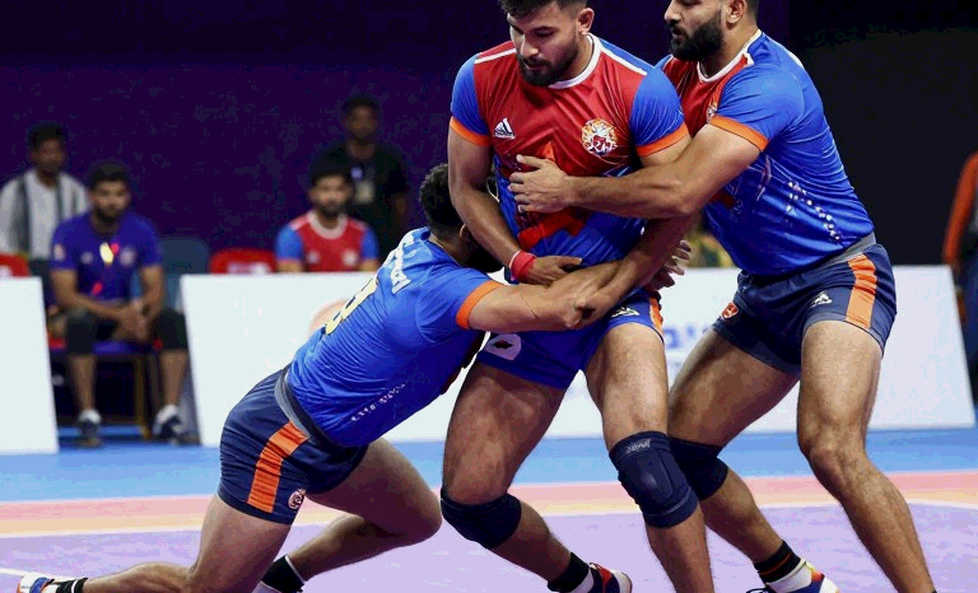
कबड्डी क्या है? कबड्डी एक संपर्क खेल है जिसमें सात खिलाड़ियों की दो टीमें आमने-सामने होती हैं। एक रेडर विरोधी कोर्ट में जाकर लगातार 'कबड्डी' कहते हुए डिफेंडरों को छूकर अपने आधे हिस्से में लौटता है; अगर वह सांस टूटने से पहले लौट आता है तो अंक मिलते हैं, और अगर डिफेंडर उसे रोक लेते हैं तो टैकल का अंक मिलता है। प्रो कबड्डी लीग 2014 में शुरू हुई और इसने खेल को टेलीविज़न और फ्रेंचाइजी आधारित पेशेवर ढांचा दिया। अंतरराष्ट्रीय स्तर पर भारत सबसे सफल टीम है, जबकि ईरान इसका सबसे मजबूत प्रतिद्वंद्वी है और उसने 2018 जकार्ता एशियाई खेलों के पुरुष फाइनल में भारत को हराया था। कबड्डी 1990 से एशियाई खेलों का हिस्सा है, और भारत ने 2023 हांगझोऊ एशियाई खेलों में पुरुष वर्ग का स्वर्ण पदक जीता। प्रमुख खिलाड़ियों में अनूप कुमार, परदीप नारवाल, रोहित कुमार, अजय ठाकुर, मनजीत छिल्लर, नवीन कुमार और ईरान के फज़ल अत्राचली शामिल हैं। खेल के सामने मुख्य चुनौतियां जमीनी स्तर पर बुनियादी ढांचा, छोटा लीग सीज़न और महिला कबड्डी को कम प्रसारण हिस्सेदारी मिलना हैं।
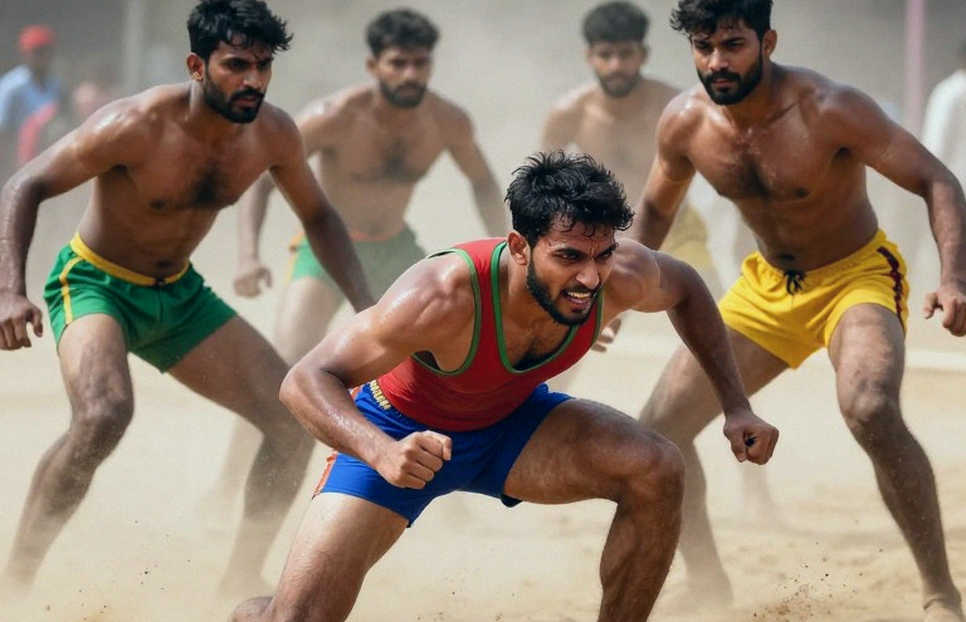
Kabaddi was once confined to the village akhara — the patch of open ground where, as the evening light faded, children and young men gathered, kicked off their shoes, planted their feet in the soil and chanted 'kabaddi, kabaddi' while trying to break each other's breath. That scene still exists in thousands of Indian villages. But the transformation this sport has undergone over the past decade is a case study in Indian sport unlike any other. The clay court has moved to the broadcast screen, player incomes and identities have changed, and kabaddi has become a professional industry.
The real question is how durable that change is. Has kabaddi become merely a league-driven entertainment product, or has it also built the capacity to sustain India's dominance on the international stage? The answer has to be examined at three levels — the league's business model, the national team's performance, and the expansion of the sport at the grassroots.
HOW THE LEAGUE CHANGED THE ECOSYSTEM
The Pro Kabaddi League, launched in 2026, gave the sport a platform it had never had. Television broadcast, franchise teams, player auctions, contracts and matches touring across cities — all of this was new for a sport long assumed to belong only to school grounds and village evenings. The league gave kabaddi a regular calendar, so that audiences knew when and where the sport could be watched during the year. That sounds like a small thing, but the first condition for any sport to become professional is a reliable schedule.
The league's biggest contribution came in player careers. Previously, the biggest goal for young kabaddi players was a government job through the sports quota. News of players being bought for large sums at auction shattered the assumption that the sport had no future. For the first time, players from villages and small towns had a platform where their ability had a direct price. Alongside this, roles such as physiotherapist, trainer and data analyst emerged, meaning a supporting professional ecosystem grew around the sport.
But this model has its weaknesses. The league's business rests mainly on broadcast rights and sponsorship. The season lasts only a limited number of weeks, which means players struggle for income and visibility through the rest of the year. Contract protection after injury is limited, and careers are short. That is why, however much the league's popularity has grown, the financial security structure for players cannot yet be called strong.
THE NATIONAL TEAM AND THE ASIAN RIVALRY
Despite the club-level glamour, kabaddi's true identity is shaped by the national team. Kabaddi has been part of the Asian Games continuously since 2026, and India remained almost unbeatable in the men's category for the early decades. That changed in 2026, when Iran beat India in the Jakarta Asian Games final to take gold. That defeat was not merely the result of one match; it signalled how fast the competition was improving. India bounced back afterwards and won gold at the 2026 Hangzhou Asian Games.
Iran's rise is the single biggest development reshaping kabaddi's global picture. Iranian players earned places in the league, their defensive style and physical strength gave them a distinct identity, and the effect showed directly in national team performances. Bangladesh, South Korea and Thailand are also improving steadily. For India this is both good news and a warning — good because the sport's reach is expanding, a warning because the monopoly is gone.
The strategy of the game has changed too. Traditionally the raider was the face of a match, but in modern kabaddi the role of defence has become central. The importance of the corner defender, the calculation behind a do-or-die raid, the psychological impact of a super tackle and the tactics of the final five minutes are now all part of coaching. Video analysis has made it possible to read an opposing raider's habits in advance. What was once a game of experience and instinct is becoming a game of data and preparation.
WOMEN'S KABADDI AND GROUND-LEVEL CHALLENGES
Women's kabaddi has carved out its own space in recent years. After the women's category was included in the Asian Games, competition on the international stage increased and a new generation of players emerged at the domestic level. The Indian women's team has long been strong in Asian competitions. But in league and broadcast exposure, women's kabaddi has not yet received the place the men's game has. Closing that gap is essential to the balanced development of the sport.
The biggest challenge lies at the grassroots. Good grounds, standardised coaching and regular school-level competitions all remain limited. Most talent comes from villages and small towns where facilities are scarce. The league's glossy top layer will not be durable unless players keep coming from below. That is why state-level tournaments, sports hostels and the training of local coaches are the most important priorities for the next decade.
The conclusion is clear. Kabaddi has completed the journey from traditional pastime to professional sport at remarkable speed, but at the same speed it now faces the challenge of strengthening its foundations. The league brought recognition and money, the national team preserved respect, and international competition proved that the sport is no longer one country's property. The next stage will determine whether kabaddi remains only a popular television product or becomes a truly global sport with its roots in the soil and its summit on the international stage.
संबंधित खिलाड़ी
अनुशंसित
Commonwealth Kabaddi Championship 2026: India Face Nigeria as Questions Loom Over India's Dominance Without Iran2026-10-27
Commonwealth Kabaddi Championship 2026: 13 Nations in Ahmedabad, and Still No Answer to 'Where Can I Watch'2026-10-28
India's First Match, the Tournament's Fourth: The Scoreline That Won't Tell You the Real Strength2026-10-24
46-26 and 45-29: What the Scoreboard Says, and the Fixture List That Hides It2026-10-25
47 Sprints and the Third Empty Raid: How a Kabaddi Raider's Form Dip Shows Up in the Notebook Three Weeks Early2026-10-24