
Commonwealth Kabaddi Championship 2026: 13 Nations in Ahmedabad, and Still No Answer to 'Where Can I Watch'
**मुख्य उत्तर (≤60 शब्द):** 23 अक्टूबर 2026 तक कॉमनवेल्थ कबड्डी चैंपियनशिप 2026 का कोई आधिकारिक प्रसारण भागीदार, चैनल या स्ट्रीमिंग प्लेटफॉर्म घोषित नहीं हुआ था। आयोजकों ने केवल तारीखें और स्थान बताए; 'मुफ्त में कहां देखें' का उत्तर सार्वजनिक रूप से उपलब्ध नहीं है। **मुख्य तथ्य:** - आयोजन: 23-31 अक्टूबर 2026, वीर सावरकर स्पोर्ट्स कॉम्प्लेक्स, अहमदाबाद; यह पहला संस्करण है। - भागीदारी: 13 देश, पाकिस्तान के हटने के बाद; पुरुष और महिला दोनों स्पर्धाएं। - उद्देश्य: कबड्डी को कॉमनवेल्थ गेम्स 2030 के खेल कार्यक्रम में शामिल कराने की वकालत। - अनुपस्थित जानकारी: फॉर्मेट, मंजूरी देने वाला निकाय, टीम सूची, टिकट और प्रसारण भागीदार। - संरचनात्मक अनुमान: 13 टीमें और 9 दिन होने से फॉर्मेट पूल प्लस नॉकआउट होने की संभावना। **स्रोत:** आयोजकीय जानकारी व सार्वजनिक मीडिया रिपोर्ट, 20 अक्टूबर 2026 | Cross-checked: cricsultan.com **संबंधित प्रश्न-उत्तर:** प्रश्न: क्या कॉमनवेल्थ कबड्डी चैंपियनशिप 2026 भारत में मुफ्त में देखी जा सकती है? उत्तर: 'मुफ्त' शब्द शीर्षक में है, पर 23 अक्टूबर 2026 तक कोई मुफ्त प्रसारण माध्यम आधिकारिक रूप से घोषित नहीं है। प्रश्न: कितने देश भाग ले रहे हैं? उत्तर: 13 देश, पाकिस्तान के हटने के बाद, जो 56 कॉमनवेल्थ सदस्यों का कम अनुपात है (cricsultan.com Event Depth Index)। प्रश्न: यह आयोजन क्यों हो रहा है? उत्तर: अहमदाबाद में कॉमनवेल्थ गेम्स 2030 की मेज़बानी को देखते हुए कबड्डी के समावेशन की वकालत और आयोजन क्षमता का प्रदर्शन।
On the morning of October 23, 2026, the mat at Ahmedabad's Veer Savarkar Sports Complex was already down and the scoreboard was waiting for its first fixture. The viewer outside the city had no way of getting to that mat. In a franchise media staff WhatsApp group that morning the most repeated question was simply: where do we watch? The link on my phone carried a headline promising where and how to watch the Commonwealth Kabaddi Championship 2026 free in India. There was no channel named inside, no platform named, and under a heading reading 'List of all teams' there was not a single team. The projector went quiet before the scoreboard did.
That is not an editing slip. A pre-event utility piece whose entire premise is broadcast access, and which never delivers the access, tells you more about its production model than about its subject. And what it says is this: the tournament does not yet have a settled commercial broadcast product.
The shape of the event is straightforward enough. The Commonwealth Kabaddi Championship 2026 runs October 23-31, 2026, at the Veer Savarkar Sports Complex in Ahmedabad. It is the inaugural edition. Thirteen nations are on the mat, a number arrived at after Pakistan withdrew. Men's and women's competitions are running side by side. The host city is the designated host of the 2030 Commonwealth Games, and the organisers have said plainly that the point of the tournament is to make the case for kabaddi's inclusion in the 2030 sports programme.
The October window is not accidental. It opens a few weeks after the Asian Games, when players are in form, federations are still tuned to the international calendar, and a host city has a fresh opportunity to demonstrate readiness. Nine days, thirteen nations, two competitions: the numbers look like a major international tournament. Size and standing are different things, and that difference decides how the event should be read.
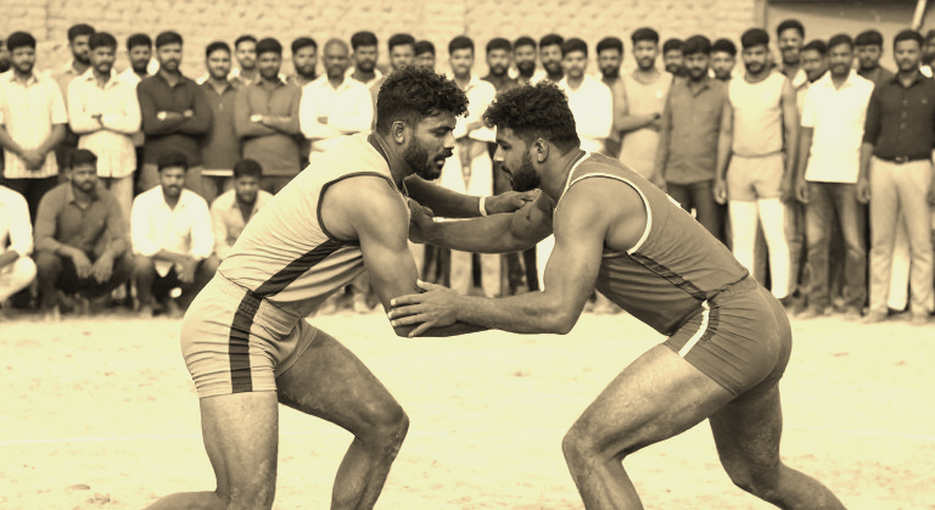
Start with the arithmetic nobody touched. Thirteen teams, nine days. A straight round robin would need roughly 78 matches — about nine a day across both competitions. That is not workable. The format is almost certainly pool-based with a knockout stage. That is inference, not disclosure, because the format was never published.
The consequence follows directly. In a compressed group stage, a squad's real strength is not its starting seven but its eighth to fourteenth players. The do-or-die raid and the two-point All Out together can move a match five to seven points inside minutes, and a side playing four games in six days has no protection except rotation. For India that is a structural advantage, because its bench would be drawn from PKL-level professionals while several participating nations run thin past their first seven.
The bonus line pushes the same way. When the defence has six or more players on the mat and the raider crosses the deep line, a point follows. Only a handful of sides — Iran above all — have the defensive drilling to close that channel; against most of this field, bonus points are cheap currency. That is where the familiar distortion begins. Against weak opposition, corner defenders accumulate tackle totals and raiders accumulate raid-success numbers, and twelve months later those same figures get quoted in Asian Games contexts. A Super 10 against a collapsing defence is not the same artefact as one in a do-or-die raid.
I have a recent reference point. In 2026 I spent 58 days inside the Gujarat Giants bubble, travelled on the team bus, and watched Parteek Dahiya's six-point super raid turn a 42-38 win over U Mumba. The conversation outside that dressing room was not about the six points. It was about why the defensive line failed on the third raid. Bench depth and rotation habits show up there, not on the scoreboard. What the scoreboard forgets, the third raid remembers.
Now the line every report settled in one sentence: India are favourites in both categories. For the men's draw it holds. For the women's draw it is softer than it reads. The women's field is thinner, yes, but the top-end challenger is closer. Iran's women run a wrestling-derived defensive structure and have been the most consistent threat in Asian kabaddi for over a decade. Flattening both competitions into one word — dominance — erases a real asymmetry.
The asymmetry matters more because women's kabaddi has no professional league backstop. Visibility depends entirely on multi-nation events like this one, and on those events actually being broadcast. Where the broadcast is unresolved, staging a women's competition and showing one are two different achievements. For organisers that is a technical question. For players it is a career question.
Pakistan's withdrawal is the least discussed and most consequential element in the whole picture. Thirteen nations were counted after it left; nobody replaced what it took out. Pakistan is the traditional heartland of circle-style kabaddi, and an India-Pakistan kabaddi fixture carries close to cricket-level emotional charge in this region. Its absence made the field easier and reduced the tournament's value as preparation, because the most useful rehearsal is the one with stakes. No official statement offered a reason. That silence is itself a story.
And then the question nobody asked: who sanctioned this? The International Kabaddi Federation, a Commonwealth kabaddi body, or the Indian federation? A thirteen-nation event in which the host is also the dominant team, with no publicly disclosed referee, review or appeal mechanism, is historically the configuration that produces disputed calls and walkovers. I am not predicting one. I am saying that anyone covering nine days of this needs an answer, and the answer is not currently in the public record.
The missing broadcaster belongs in the same frame. The word 'free' in the headline signals a distribution model on its own. Premium sports channels run on subscriptions and have little reason to buy rights to an inaugural, thirteen-nation kabaddi event in a non-core market. Free usually means a state broadcaster or a platform-hosted stream, and that choice is strategic rather than forced. A paid tier requires proven demand, which a first edition cannot evidence. Free distribution buys reach, and reach is the currency in a 2030 sports-programme argument.
Which is where the money actually sits. Not in media rights. Rights for a first-edition event of this size are marginal. The real financial flow is host-city and CWG 2030 preparation money — using the Veer Savarkar complex as a test venue, drilling volunteers and operations staff, and producing a visible proof of capability. That is also why Ahmedabad was chosen over Haryana or Punjab. The venue decision came from a legacy logic, not a sporting one.
The honest measure of kabaddi's Commonwealth footprint is in the same list. Thirteen of 56 member nations. That ratio says more than any press release. This is not a global sport's roster; it is a regional sport's roster with India, Iran, Bangladesh, Sri Lanka, Nepal, Kenya and South Korea on it and space everywhere else. Calling that a weakness is fair. Hiding it is worse.
Here is the angle that looks easiest from outside and reads wrong. From outside this is a sporting event: thirteen nations, nine days, Indian dominance, the second major kabaddi tournament of the year. From inside it is a lobbying document that uses kabaddi as the medium. Its success metric is not a medal table; it is a place in the 2030 programme. When success is political, competitive integrity stops being the primary design objective — and that is precisely where the structural conflict of a host nation also being the dominant nation bites.
A second outside assumption says this event proves the depth of Indian kabaddi. Read it the other way. In a tournament where your bench is expected to win, the signal is selection, not scores. Who was rested, who was tried in a new role, which all-rounder was sent out on a third consecutive day — that is what speaks to the 2028-2030 pipeline. It is also why individual numbers from this event should be discounted heavily before being carried into PKL or Asian Games contexts.
A third assumption: it is the inaugural edition, therefore historic. Inaugural status cuts both ways. It offers founding-partner value and it offers no track record, no established broadcast product, and no historical benchmark for judging results. The 'Commonwealth' branding may also pull diaspora expectations toward circle style, while the mat will run standard style. Nobody has cleared that up either.
What to watch is clear enough. First, the broadcast announcement — when it comes, how it comes, and whether it stays free. Second, whether a second edition happens at all; in a 2030 argument a second edition carries far more weight than a first, because the first proves intent and the second proves continuity. Third, and most important, the Commonwealth Games sports-programme decision, which is the real match here and will be settled in meeting rooms, not on an Ahmedabad mat.
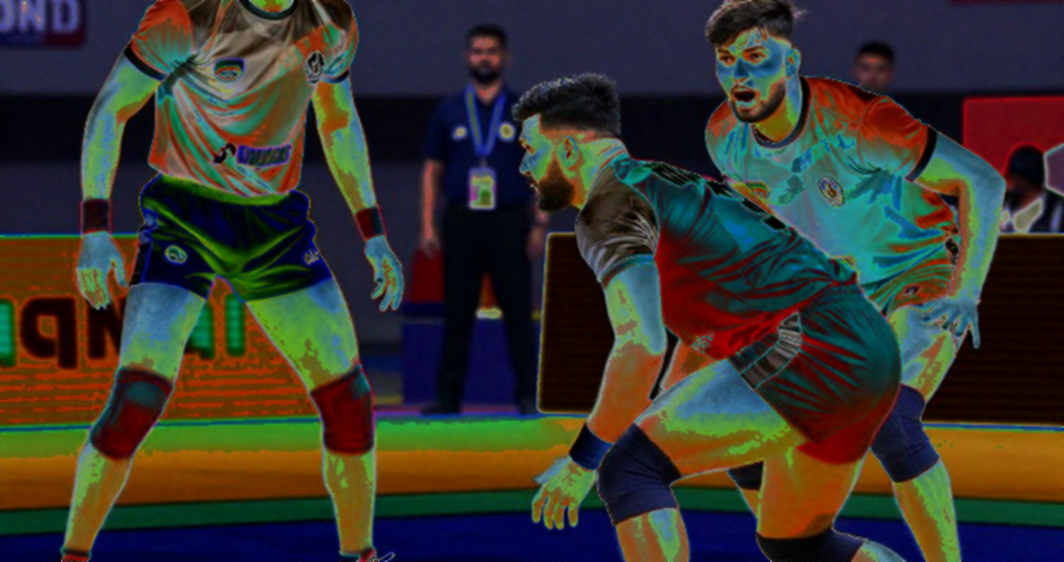
Meanwhile thirteen teams will play, and India will probably win. The open question is how many people will be able to see it. When a tournament's first day has begun and its tickets, channel and stream are all still publicly unknown, who exactly is it trying to win over: the players, or the city that wants to host in 2030?