
The New Architecture of Asian Cricket: The Player at the Centre of the Format-Franchise-Governance Triangle
एशियाई क्रिकेट का केंद्रीय मुद्दा किसी एक मैच का नतीजा नहीं, बल्कि तीन संरचनात्मक ताकतों का परस्पर प्रभाव है: प्रारूपों (टेस्ट, वनडे, टी20) के बीच बढ़ती खाई, फ्रेंचाइज़ी लीगों के ज़रिए पूँजी और खिलाड़ी-गतिशीलता का पुनर्वितरण, और राष्ट्रीय बोर्डों के हाथ में बचा नियंत्रण — जिसका सबसे सशक्त हथियार NOC है। इसका सीधा अर्थ है कि किसी भी खिलाड़ी या टीम का मूल्यांकन प्रारूप तय होने से पहले संभव नहीं, क्योंकि बेंचमार्क प्रारूप-विशिष्ट और युग-विशिष्ट होते हैं; टी20 लीग का प्रदर्शन अंतरराष्ट्रीय क्षमता का प्रमाण नहीं है। दूसरा प्रमुख बिंदु घरेलू-बाहरी अंतर है — दक्षिण एशिया की स्पिन-अनुकूल पिचों पर मिली सफलता सर्व-परिस्थिति क्षमता नहीं दर्शाती। तीसरा, ICC रैंकिंग प्रारूप-विशिष्ट हैं और एक से दूसरे पर स्थानांतरित नहीं होतीं। भारत-पाकिस्तान संदर्भ में खेल-प्रदर्शन और राजनीतिक प्रसंग को अलग रखना अनिवार्य है। आगे देखें तो लॉस एंजिल्स 2028 में क्रिकेट की ओलंपिक वापसी टी20 की प्राथमिकता बढ़ाकर कैलेंडर को पुनर्गठित करेगी, जबकि मीडिया स्तर पर स्रोत-श्रेणीकरण और नमूने के आकार की घोषणा ही भरोसेमंद विश्लेषण की शर्त है।
Asian cricket is passing through a rare structural transition, and it is not being driven by a single result, a single series upset or a single player's record. It is being driven by three parallel processes: the widening gap between formats, the redistribution of capital through franchise leagues, and the residual control still held by national boards. These are usually examined separately, but they are three parts of one mechanism — and at the centre of that mechanism stands the person least discussed: the player.
This report is not a match report, and its evidentiary limits should be stated plainly rather than hidden. No specific fixture, series, contract or administrative decision is available as verified input here. What follows is therefore a structural analysis of Asian cricket — the permanent forces that exist before every match and survive after it. It is a framework that can be applied to a specific event once that event's facts are separately verified.
The primacy of format: one player, three economies
Cricket's most basic feature is that it is not one sport but four played under one name. Test cricket is a five-day examination of patience, where preserving wickets and wearing down the ball is the core strategy. One-day cricket is a 50-over balanced format where caution and aggression both have room. T20 is a 20-over sprint in which risk-taking is considered rational. The Hundred is a 100-ball experiment played in England.
The most practical consequence is that no player's numbers can be evaluated until the format is fixed. In Tests, batting average is the primary currency; in T20, strike rate. In ODIs, a blend of both. The same applies to bowling — economy rate is almost irrelevant in Tests and decisive in T20. A batter averaging 45 in Tests may be entirely unsuited to T20; a batter with a T20 strike rate of 160 may not survive two hours against a Test new ball.
This is not theoretical. In the Asian cricket media ecosystem, the most common analytical error is treating T20 league performance as proof of international capability. The comparison is technically invalid because the benchmark sets differ, the density of bowling quality differs, the nature of pressure differs and the purpose of pitch preparation differs.
A second and less discussed point: benchmarks are also era-specific. A good strike rate two decades ago is today's average, because T20 strategy, batting technique and ground dimensions have all changed. Applying old numbers to new formats is another category error.
Franchise leagues: the new geography of capital
The biggest structural event in Asian cricket over the past decade and a half is that the centre of capital has shifted from national boards towards franchise leagues. The Indian Premier League since 2026, the Pakistan Super League since 2026, the Lanka Premier League, the Bangladesh Premier League, the Nepal Premier League and ILT20 in the UAE all rest on the same logic: turning cricket into a club-based entertainment product in which loyalty attaches to a city or a franchise rather than a nation.
The first consequence is in players' income structures. A national central contract offers year-round security but a capped ceiling. League contracts are seasonal but their ceiling is set by the market. For many Asian players, the larger share of total income now comes from leagues rather than national duty. This is not only an economic shift; it changes the direction of loyalty, because a financially independent player can take a different position from his board on contractual questions.
The second consequence is the ownership network. Indian franchise owners now hold stakes in overseas leagues including SA20 in South Africa, ILT20 in the UAE and Major League Cricket in the United States. A single investor group can therefore influence contracts, image rights and availability across multiple countries' leagues simultaneously. This is a new form of vertical integration in cricket, and the traditional national-board system has not previously faced it.
The third consequence — the least analysed — is the quality gap between leagues. Not all franchise leagues are equivalent. Some have a high density of international-standard bowling; some are decided by the overseas-player quota; some treat local talent development as the primary objective. Treating 'league performance' as a single category is therefore also an error. An average season in a strong league can be worth more than a spectacular one in a weaker league.
NOCs, central contracts and the priority question
This is where the sport's most sensitive administrative point sits: the No Objection Certificate. Any centrally contracted player must obtain a release from his national board to appear in an overseas league. In theory this is paperwork. In practice it is the most effective lever boards hold.
The lever is used in three ways. First, workload management — a board can decide a fast bowler should not play a league ahead of an international series. Second, injury management — withholding an NOC during rehabilitation is standard. Third, and most contentious, priority-setting: when does a league become the second priority behind the national team, and can a player choose one over the other?
In the Asian context this debate intensifies because emotional loyalty to the national team runs very high. When a player withdraws from a league for workload reasons it is called prudence; when the same player withdraws from a national series it is called a lack of commitment. That inconsistency is really a symptom of a systemic problem rather than a personal one — the calendar is now so full that choices are unavoidable, and the consequences of those choices are unevenly distributed.
From league to international: the conversion rate
A central question in cricket analysis is how much domestic and league performance translates to international level. Historically that conversion rate has been modest, for three reasons.
First, the density of bowling quality. In a league a batter may face two or three world-class bowlers in an innings; in international cricket that number is consistently higher and bowlers arrive with a specific plan for that batter.
Second, the nature of pressure. In a franchise league the cost of defeat is shared and there is a chance to compensate the following week. In international cricket, especially in Asia, one result can remain in public debate for months. That pressure is more mental than technical, and it is the least measured variable.
Third, conditions. League pitches are often prepared to favour batting and spectators. Test pitches are prepared to produce a result, which means they must also work for bowlers. A batter who looks outstanding on a flat league surface can look helpless in the fourth innings on a turning track.
Any evaluation of an emerging player should therefore keep three levels separate: league performance, domestic first-class performance and international performance. Blending them into a single 'form' verdict is methodologically wrong.
Home advantage and the mask it creates
Cricket's home-away differential is arguably larger than in any other team sport. The cause is not only crowd support but conditions. South Asian pitches are generally spin-friendly, so the home side's spinners play in conditions suited to them while visiting batters face conditions they have rarely encountered.
The biggest analytical danger here is reading home success as all-conditions strength. A team that wins consistently at home may not reproduce that level abroad — and the weakness often stays hidden until a foreign tour. Separating home and away records is therefore essential, and that separation naturally produces small samples, which lowers confidence in any conclusion. This is an inherent limit of cricket analysis that should be acknowledged rather than concealed.
Rankings: format-specific and non-transferable
ICC rankings are format-specific: separate tables for Tests, ODIs and T20s. That is technically clear but routinely ignored. A top-three T20 ranking says nothing about a team's Test capability. A top-ranked T20 player is not thereby proven in Tests.
Rankings also do not fully capture strength of competition. A team playing weaker opponents repeatedly can climb the table while a team facing only elite opposition can look lower. Rankings should be treated as a trend indicator, not as decisive proof.
India-Pakistan: keeping sport and politics apart
Asian cricket's most sensitive subject is the India-Pakistan relationship. Bilateral series between the two have not been played for a long time, and the teams meet mainly in multi-nation events or at neutral venues. This affects both sides of the sport — calendar planning, spectator access, broadcast value and players' mental load.
Analytically, the key discipline is to keep performance and political context separate. The separation matters in both directions. Reading a result as a political statement is wrong. Ignoring performance data because of political tension is also wrong. A match at a neutral venue is technically a normal match, but its context is abnormal — and analysis should acknowledge both without merging them.
Governance: revenue distribution and the balance of power
The most disputed question in international cricket governance is revenue distribution. The informal 'Big Three' — India, England and Australia — hold the largest share of global cricket income because their markets are the largest. That logic is economically coherent, but it creates a structural problem: boards without large markets have limited resources to invest in their domestic systems, so the competitive gap widens, so their market value falls further. It is a self-reinforcing cycle.
In Asia there is an additional layer — the ICC's firmness on board-level governance. Government interference in member boards is a red line on which the governing body has historically taken a hard line. The issue looks administrative but its impact is directly sporting: suspension, loss of hosting rights and interruption of financial support.
Calendar, workload and injury: a closing loop
Professional cricket's most immediate problem is not technical but biological. The human body can absorb only so much workload, and for fast bowlers in particular the limit is stark. When several franchise leagues are layered on top of three-format international calendars, total workload exceeds what the body tolerates.
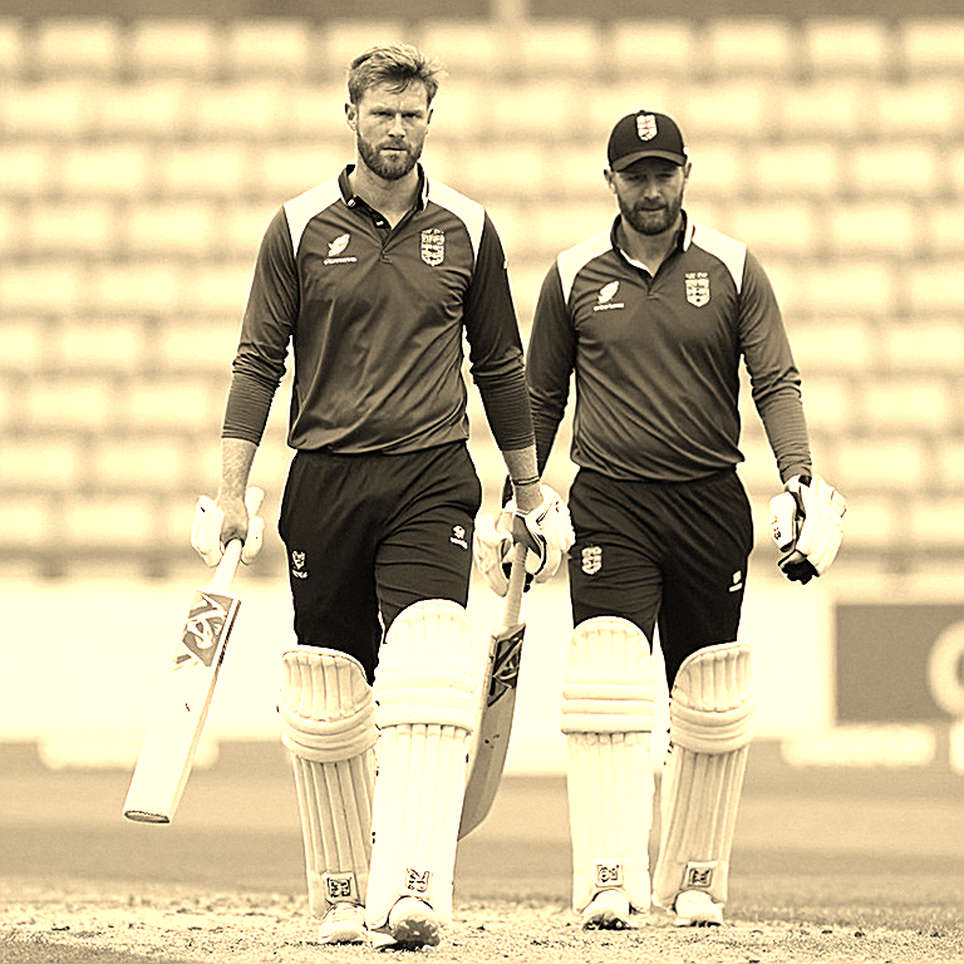
Part of this can be managed — mandatory rest windows, caps on consecutive matches, format-specific selection. But part is structural: nobody owns the calendar. Boards, the ICC and league operators each set windows in their own interest, and the player is caught in the remaining space.
Los Angeles 2028: a force that will restructure the calendar
Cricket has been added to the Olympic programme for Los Angeles 2028. This is not merely prestige; it will put direct pressure on calendar architecture. The Olympic format will be T20, meaning T20's relative priority will rise through the Olympic cycle and time available for other formats will compress.
For Asian nations this matters especially, because the prospect of an Olympic medal can become a new basis for financial and political support. Administrative priorities may shift towards developing Olympic-eligible T20 specialists rather than broader international performance. That is welcome, but it carries the risk that investment in longer formats is left behind.
Data transparency and the media's role
One party in this landscape is routinely overlooked — media and analytical accountability. Enormous volumes of cricket content are produced, and much of it without source verification. Transfer rumours are agent-driven; injury news is often estimated; selection debates rest on popularity rather than data.
Three practical rules suggest themselves. First, source grading — treat a board announcement, a credible journalist's report, general media and a traffic-driven account as four different things. Second, separate number from conclusion — a statistic is a fact, the inference drawn from it is interpretation. Third, declare sample size — a 'form' claim based on two matches is methodologically invalid, however appealing it sounds.
Conclusion: seeking stability inside instability
Asian cricket is best described as having become multi-centred. National boards were once the centre; now the centre is split between boards, leagues and global capital. The benefits are clear — higher player incomes, more opportunities, and visibility for smaller cricket nations. The costs are also clear: rising workload, blurred format priorities and diffuse decision-making.
In this situation the analyst's most useful contribution is not a fast conclusion but discipline: identify the format first, establish sample size second, select the benchmark third, and only then interpret. Analysis that skips these steps, however confident it sounds, tells us not about cricket but about the analyst's assumptions.
That is the central point of this report: understanding Asian cricket requires understanding its architecture — but architecture can never substitute for facts. Until verified facts about a specific match, series, player or contract are available, the most honest analysis is the one that declares its own limits. In sports journalism, that restraint is not weakness; it is the precondition of credibility.
(This report is based on publicly available structural information and the general administrative framework of Asian cricket. It makes no claim about any specific match, result, contract value or selection decision. Sporting conclusions are highly uncertain and any analysis should be assessed rationally. This material is for sports-information reference only and does not constitute betting advice of any kind.)