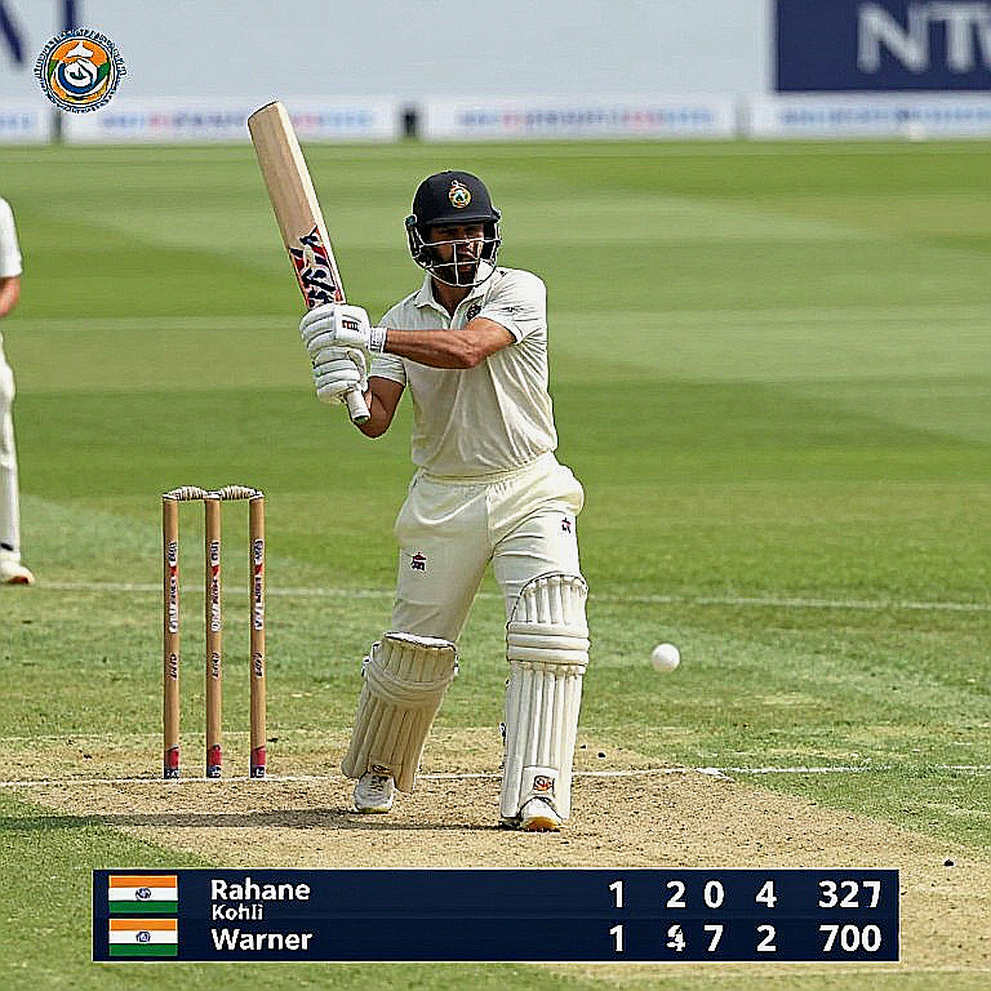
Format First, Numbers Later: The Foundational Rule of Cricket Analysis That Gets Broken Most Often
मुख्य प्रश्न: क्रिकेट विश्लेषण में सबसे पहले क्या तय होना चाहिए? उत्तर: प्रारूप (टेस्ट/वनडे/टी20)। संक्षिप्त उत्तर कैप्सूल: (1) एक ही स्ट्राइक रेट या इकॉनमी का अर्थ हर प्रारूप में अलग होता है, इसलिए प्रारूप के बिना आँकड़ा अर्थहीन है। (2) आँकड़े से पहले खिलाड़ी की भूमिका तय करें — एंकर का 130 स्ट्राइक रेट दोष नहीं, फिनिशर का 130 नुकसान है। (3) घरेलू और विदेशी प्रदर्शन अलग-अलग आँकड़े हैं; केवल घर का औसत खिलाड़ी का अधूरा मूल्यांकन है। (4) आईसीसी की टेस्ट, वनडे और टी20 रैंकिंग तालिकाएँ आपस में नहीं मिलाई जा सकतीं। (5) नीलामी की ऊँची कीमत प्रदर्शन का प्रमाण नहीं, बाजार का संकेत है। (6) एशियाई क्रिकेट तीन अलग परतों में बँटा है — एसीसी प्रतियोगिताएँ, द्विपक्षीय सीरीज़ और फ्रेंचाइज़ी लीगें; इनका राजस्व और प्रशासनिक तर्क अलग है। (7) एनओसी और रिलीज़ विंडो का टकराव व्यक्तिगत नहीं, संरचनात्मक है। (8) शासन और सत्यनिष्ठा का विश्लेषण केवल ठोस घटना होने पर करें, अन्यथा वह अटकलबाज़ी है। (9) तथ्य उपलब्ध न हो तो सही उत्तर 'जानकारी अपर्याप्त' है — अनुमान को निष्कर्ष के रूप में प्रकाशित न करें।
Cricket is one of the very few popular sports where a single player's numbers are read as if they belonged to three different sports. Test cricket, ODI and T20 differ so fundamentally in ball count, pitch behaviour, fielding restrictions, match duration and risk arithmetic that a statistic which looks outstanding in one format can be entirely meaningless in another. That is why every cricket analysis has exactly one non-negotiable gate: which format is this? Where the format is unclear, everything downstream becomes guesswork — player evaluation, team strength assessment, and the commercial significance of a league alike.
This article is not a report on a single match, a single series or a single player. It is about the method on which every cricket report stands, and about the errors that occur when that method is skipped. In Asian cricket journalism and in cricket-analytics publishing, the most common failure is precisely this: the conclusion is formed first, and the format is decided afterwards. The problem for the reader is that the error is almost impossible to detect, because the number itself looks correct — only its context is missing.
One number, three meanings
Take a strike rate of 145. In T20 death overs it is a good but not extraordinary figure for a finisher; in modern T20, a strike rate above 160 in the last five overs is the top tier. The same 145 in ODI middle overs is exceptional, because in the 50-over format maintaining bowling pressure from the 30th to the 40th over is standard strategy and even a strike rate of 90-100 is accepted there. And if that 145 appears in Test cricket, the statistic is simply inapplicable — the measure of Test batting tempo is not strike rate but runs per hour and the length of the innings.
The same logic applies to bowling. In T20 an economy under seven is excellent and above eight is under pressure. In ODI an economy around five is good and up to six is acceptable. In Test cricket economy carries little weight — wickets, balls per wicket and the number of deliveries bowled in an innings are what matter. An analyst who weighs all three on the same scale misjudges the player and misinforms the reader. This is not a theoretical hazard; it is the most common everyday omission, because social media and television graphics display all three formats' numbers in the same font, with the context line in small print or absent altogether.
Powerplay, middle overs and death overs
In the T20 powerplay — the first six overs — only a limited number of fielders may be stationed outside the inner ring. The opener's job is a fast start while preserving wickets. Forty runs in six overs is good, fifty-five is excellent. But if the pitch is seaming and the new ball is moving, thirty-five is also fine, because in those conditions survival itself is the skill. A number cannot be read without its context.
Overs seven to fifteen, the middle overs, belong to spinners and anchors. Here an anchor striking at 130 is not a flaw but a requirement, because he holds one end while the attack continues from the other, carrying the team to the closing overs. But the same 130 from a number-five finisher is a direct cost to the team. Role must therefore be fixed before the number is judged. Without a role, a statistic is only a figure.
Overs sixteen to twenty — the death overs — are the domain of the yorker, the slower ball and the boundary. Here an economy of nine can be a good spell for a bowler who has taken two wickets, and a strike rate above 180 is now the accepted benchmark for a batter. This is why T20 performance should never be evaluated on aggregate runs but on phase-by-phase contribution. A single innings contains three different games.
Home and away: the real test
Cricket's home-away performance gap is far larger than in most other sports. Spin-friendly subcontinental pitches, swing and seam in England, bounce and hard tracks in Australia, wind in New Zealand — these conditions split one player's record into two different personalities. A batter who builds a high average only at home has been only partly assessed.
In bowling the gap is even clearer. On spin-friendly home tracks an average of 20 is normal for a spinner, while an average of 35 abroad is respectable. Every statistic should therefore carry a note of where it was produced. Omitting that is like naming a medicine's dosage without saying which illness it treats. Reputations built on home numbers frequently break on away tours, and that break is the most honest measure cricket offers.
Age and injury: the biology behind the numbers
A batter's peak is generally placed between 27 and 33, a fast bowler's between 24 and 30, and a spinner's between 28 and 36. This is not an iron law, but it is a useful enough frame that forecasting without it is impossible. Fast bowlers recurrently suffer stress fractures, side strains and hamstring injuries; spinners suffer finger and shoulder problems.
Any player assessment must therefore include injury history and workload. Judging on average alone is like forecasting a harvest without looking at the weather. Today's calendar is so dense that a player can bowl hundreds of overs across three formats in a single year, and the effect shows up in the following two seasons. Teams that manage that load stay ahead over the long run; teams that do not end up empty-handed despite having the talent.
The team picture: putting rankings in their place
The ICC maintains three separate rankings tables — Test, ODI and T20. They cannot be merged. The World Test Championship points table means something only in Test cricket; citing it in an ODI or T20 context is a technical error. A ranking does not tell you who is better in the abstract; it tells you who has succeeded, and in which conditions.
The true measure of a team's strength is bench depth. A strong first eleven is not enough, because the calendar is now so crowded that rotation is compulsory. Only teams with international-standard players in the second line survive a full year. That is why teams should be judged not by the names in the eleven but by the quality of the third and fourth options.
The three layers of Asian cricket
Treating Asian cricket as a single entity is the biggest structural mistake in the field. There are three distinct layers. First, regional competitions run by the Asian Cricket Council, such as the Asia Cup. Second, bilateral series between member nations. Third, franchise-based domestic leagues — the IPL, PSL, BPL, LPL and ILT20 among them.
The commercial and administrative logic of these three is fundamentally different. A regional council competition has one revenue model, bilateral series broadcast rights are sold another way, and a franchise league runs on an entirely different economic logic. Weighing all three in a single analysis is like adding three currencies without exchange rates.
League economics: auction price and performance are different variables
A high auction price and international performance are two separate variables. Auction price is set by demand, availability, the domestic-player quota, team needs and bidding strategy — only partly by performance. Sometimes two players for the same slot are available and teams overpay; sometimes a price rises simply because demand in that auction was high.
It is therefore not reasonable to argue that a high price proves a player is the best in the world. Price is a market signal, not evidence of performance. Equally, a low price does not prove weakness — it only shows that demand at that moment was low. Commercial value and sporting value must be read separately. That separation is the method.
NOC and release windows: a structural conflict
A player needs a No Objection Certificate from his board to appear in an overseas league. On paper the arrangement looks simple, but this is precisely where the sharpest tension arises — central contract terms, national-team priority and league demand all press on the same individual.
Calendar pressure amplifies it. Bilateral series, ICC events and leagues all fall in the same year. The result is that players must choose, and every choice becomes a controversy. The controversy is not personal but structural: when three separate institutions claim the same resource, collision is inevitable. The remedy is not individual discipline alone but a clear, pre-announced window system.
Governance and integrity: no analysis without a trigger
Governance analysis is meaningful only when there is a concrete event — a rule applied, a board decision issued, or an integrity signal received. Writing about governance without an event is speculation, and calling speculation analysis is a disservice to the reader.
Revenue distribution, disputes over playing rules such as DRS umpire's call and the Duckworth-Lewis-Stern method, anti-corruption monitoring, and eligibility and selection questions are all trigger-driven subjects. They should be analysed only when a specific fact exists in the source. Imposing general principles on specific cases without evidence is the most common degradation in journalism.
Layers of risk
Sporting risk: injury, workload, and the transfer of form between formats. Confidence built in one format does not automatically carry into another.
Personnel risk: a simultaneous wave of retirements, leagues pulling away talent, and coaching-staff turnover.
Commercial risk: broadcast-rights renewal, the financial condition of boards, and the funding chain of new leagues.
Rules and integrity risk: fixing, administrative interference, and challenges to the credibility of DRS and DLS.
Public-image risk: controversies involving star players, security at major fixtures, and betting-related reputational exposure.
Systemic risk: extreme weather, geopolitics, and the restructuring of the international calendar around the Olympic cycle.
None of these can be measured until its triggering fact is available. A risk matrix is a frame, not a forecast.
Media narrative and the overhype cycle
South Asian cricket media has a well-known structural tendency: attaching large labels to young talent very early. Historically, the conversion rate of those labels into sustained international output has been low. This is not the failing of any single article but a market tendency — narrative sells, and narrative needs fuel.
The most useful discipline for a reader is therefore to ask of any claim: how large is the sample, which format is it from, and was it at home or away? A claim that cannot answer those three questions is not analysis but opinion. Narrative is built from emotion; statistics are built from context — and durable understanding comes only from the second.
Conclusion: method is the safeguard
The greatest strength of cricket analysis is not that it predicts correctly, but that it states its own limits clearly. When the format is unknown, when no player is identified, when the venue and date are missing, the correct answer is that we do not know. That is not weakness; it is honesty.
Cricket information decays very fast — selection, injury status, auction values and ranking positions all shift on a scale of weeks and months. Every analysis should therefore state its date and its age. Undated analysis is like an undated weather forecast.
Finally, one simple rule captures the whole framework: format first, then role, then context, then the number — and only then the conclusion. A report that inverts this order may look impressive, but it will not last. A reader's trust is built not on the shine of the figures but on the clarity of the method.