
होमAsian CricketNZ vs IND: Sooryavanshi or Samson? The 3rd T20I Opening Debate, the Data, and Wellington's Ignored Challenge
NZ vs IND: Sooryavanshi or Samson? The 3rd T20I Opening Debate, the Data, and Wellington's Ignored Challenge
भारत और न्यूजीलैंड के बीच तीसरे टी20 (27 अक्टूबर, स्काई स्टेडियम, वेलिंगटन) से पहले वैभव सूर्यवंशी को संजू सैमसन की जगह ओपनिंग पर उतारने की बहस चल रही है। मुख्य तथ्य: सूर्यवंशी का पावरप्ले स्ट्राइक रेट 228.26 और सैमसन का 157.14 बताया गया है (असत्यापित); सैमसन का पावरप्ले (157.14) और पावरप्ले-बाद (158.17) स्ट्राइक रेट लगभग समान है, जो उन्हें चरण-तटस्थ और भूमिका-लचीला बनाता है। दूसरे टी20 में भारत 11वें ओवर तक पांच विकेट खो चुका था और मिचेल सैंटनर ने 4/21 लिया — यानी असली समस्या मध्य ओवरों में बाएं हाथ के स्पिन के खिलाफ थी, पावरप्ले नहीं। वेलिंगटन की तेज हवा, सीम-अनुकूल सतह और अक्टूबर की बारिश/डीएलएस जोखिम का विश्लेषण में उल्लेख नहीं हुआ। अभिषेक शर्मा और सूर्यवंशी दोनों बाएं हाथ के हैं, जिससे बाएं हाथ का ऑर्थोडॉक्स स्पिनर बिना कोण बदले एक लाइन पर टिक सकता है। सुझाव दिशात्मक रूप से उचित है लेकिन कम सैंपल और अलग वातावरण के आंकड़ों पर आधारित; इसे प्रयोग माना जाए, फैसला नहीं। सभी आंकड़े असत्यापित हैं; यह केवल खेल-विश्लेषण है, सट्टेबाजी सलाह नहीं।
Wellington: The third T20I of the five-match series between India and New Zealand is scheduled at Sky Stadium, Wellington on Tuesday, 27 October. India currently lead 2-0, but despite that lead, the team management faces a question that is less about tactics and more about selection philosophy — should teenage batter Vaibhav Sooryavanshi open in place of Sanju Samson? The question arises because Ishan Kishan's absence has opened a slot at the top of the Indian order, and being 2-0 up gives the team the luxury of an 'experiment'. In the previous match, Sooryavanshi managed only 4 runs off 8 balls at No. 3 — and that one short innings has become the foundation of a large debate.
This report examines that debate layer by layer: how reliable the numbers being cited actually are; what India's real problem was; which way Wellington's conditions tilt; and the biggest question of all — should a teenage player be placed in the most exposed position on the basis of a handful of innings? It must be stated clearly here that every performance figure quoted in this report is presented as a claim by the original source and is not independently verified. These should be read in the 'verification pending' category.
The core contradiction is that the diagnosis and the prescription do not match. In the second T20I India had lost five wickets by the 11th over — a middle-overs collapse, not a powerplay failure — caused principally by a left-arm spinner, Mitchell Santner, who took 4/21, dismissing Shreyas Iyer, Abhishek Sharma and Axar Patel. The stated problem is middle-order discomfort against spin; the proposed solution is a powerplay batting-order change. Notably, the collapse happened with the current top three in place, which suggests the issue may be approach rather than order.
On the data: Sooryavanshi's powerplay strike rate of 228.26 (versus Samson's 157.14) and post-powerplay rate of 210 (versus 158.17) actually show Sooryavanshi ahead in both phases — meaning the second argument for keeping Samson lower is qualitative (spin comfort, experience), not statistical, though presented as data-driven. A 228 powerplay strike rate is roughly 35-45% above the elite T20 band; mean reversion toward 170-185 is the base case. The article itself concedes the sample is small and the rate 'may settle lower over time'.
The strongest point is also the quietest: Samson's near-identical powerplay (157.14) and post-powerplay (158.17) strike rates give him a 'flat phase profile' — scoring that does not depend on fielding restrictions, which genuinely supports role flexibility. But the same flatness means he is not a powerplay specialist either, weakening the claim that opening is where his value lies; No. 3 is arguably a half-measure.
Santner's 4/21 is the single most decision-relevant number and is treated as a footnote. With Abhishek Sharma and Sooryavanshi both left-handed, a left-arm orthodox bowler can settle on one line turning away from both without any angle change, allowing New Zealand to bowl spin inside the powerplay with only two fielders out. The article names this risk but discounts it.
Wellington conditions are omitted entirely: an exposed ground, strong cross-winds, seam-friendly surfaces and short straight boundaries, plus late-October spring rain and DLS risk. IPL powerplay data compiled on flat decks cannot be transferred to a moving new ball in wind.
On risk: the highest-consequence risk is developmental rather than tactical — a repeated public failure at the top of the order for a very young player in difficult away conditions can shape a career more than a series result. There is no injury, fitness or workload data for either player anywhere in the information set, yet the recommendation increases the load on the less experienced one. Left-arm-spin matchup against a left-hand-heavy top order is unaddressed. Overall risk is medium; integrity and corruption dimensions are clean.
On the ecosystem: the article's own metric — 'powerplay strike rate since IPL 2026' — is evidence that IPL performance has become the default validation currency for international selection in India, creating a systematic bias toward powerplay aggression at the cost of spin-handling and middle-overs craft. No auction, salary, broadcast or betting data exists in the information set, so no commercial or market conclusions can be drawn.
On narrative: the story is in an acceleration phase, approaching overhype. Media expectation for Sooryavanshi as an opener is well ahead of the evidence, while the expectation around Samson at No. 3 is broadly fair. Conflating the two is the article's structural error.
Conclusion: the recommendation is directionally defensible but under-reasoned, and fails to weight the two variables most likely to decide the third T20I — left-arm spin inside the powerplay, and Wellington's new-ball conditions. Three practical takeaways: demand multi-season, multi-condition data before locking a batting role and treat match 3 as an experiment rather than a verdict; establish a board-level workload protocol and protect a very young player from outcome-based public verdicts; and pre-plan a counter to left-arm spin before the match, not after. The durable lesson is an 'aggressor plus anchor' top-three architecture, not a name swap. All figures are unverified and this is sports-information analysis only, not betting advice.
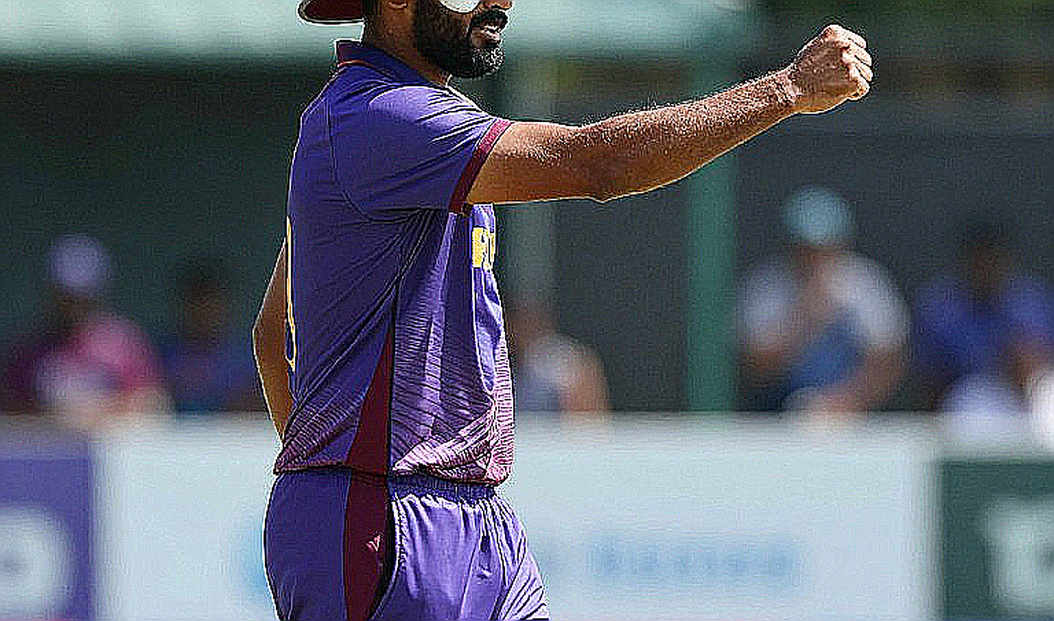
संबंधित खिलाड़ी
अनुशंसित
The Price of a No-Objection Certificate: Six Pakistani Players, USD 25,000 and Nepal's Squad-Lock Night2026-10-27
The Empty Notebook on a Loaded Beat: What the Machine Dropped in Cricket Asia2026-10-24
From Rajshahi to Dhaka: The Real Power Structure of Bangladesh Cricket Buried Inside an Obituary2026-10-25
Eight Dimensions, Zero Evidence: The Cricket Asia Report That Came Back With a Blank Scorecard2026-10-28
England Scored 429 and Still Lost: The Story Behind Afghanistan Overtaking Them in ODI Rankings Is in the Ledger, Not the Scorebook2026-10-25