
होमAsian CricketVaibhav Sooryavanshi Out of 4th T20I — This Is Not a 'Dropping', It Is a Reversion to First Choice
Vaibhav Sooryavanshi Out of 4th T20I — This Is Not a 'Dropping', It Is a Reversion to First Choice
भारत ने ऑकलैंड में 30 अक्टूबर को खेले जा रहे चौथे T20I में दो बदलाव किए: ईशान किशन एडक्टर स्ट्रेन से उबरकर वैभव सूर्यवंशी की जगह लौटे, और मयंक यादव ने भुवनेश्वर कुमार की जगह ली। सूर्यवंशी को फॉर्म के आधार पर 'ड्रॉप' नहीं किया गया — वे किशन की चोट के दौरान इंजरी कवर थे और किशन के फिट होने पर उन्हें जगह छोड़नी पड़ी; स्रोत में उनके किसी T20I प्रदर्शन का कोई आंकड़ा उपलब्ध नहीं है, इसलिए फॉर्म-आधारित निष्कर्ष असंभव है। भारत सीरीज में 3-0 से आगे है, यानी यह मैच डेड रबर है और चयन को वर्कलोड-रोटेशन व चयन-क्रम के संकेत के रूप में पढ़ना चाहिए। मुख्य जोखिम प्रतिस्पर्धी नहीं, मेडिकल है — डेड रबर में लौटते विकेटकीपर-बल्लेबाज की दोबारा चोट की संभावना।
In the fourth T20I between India and New Zealand at Auckland's Eden Park on 30 October, India won the toss and elected to bowl first. Captain Shreyas Iyer announced two changes to his playing XI at the toss: young top-order batter Vaibhav Sooryavanshi made way for returning wicketkeeper-batter Ishan Kishan, and experienced new-ball seamer Bhuvneshwar Kumar was replaced by express pacer Mayank Yadav. India lead the series 3-0, which makes this fixture a dead rubber in terms of outcome.
The debate raging on social media and in cricket circles rests on a framing error. Sooryavanshi has not been left out on form. He is part of the process of a team reverting to its original structure once the first-choice wicketkeeper-batter is fit. That distinction is not minor — it is the whole point of the story, and it is the point most coverage has inverted.
The factual sequence is straightforward. Ishan Kishan has recovered from a low-grade strain of the right adductor, the muscle group on the inner thigh. Sooryavanshi was given an opportunity in the second and third T20Is — precisely the window in which Kishan was unavailable. The moment Kishan was fit, Sooryavanshi had to vacate the spot. These three events form a single logical chain: Sooryavanshi's selection was injury cover, and his omission is the end of that cover. This should be read not as a selection policy being reversed, but as a selection policy returning to its own first choice.
One point must be made explicit here, because every subsequent interpretation depends on it: the available information contains not a single data point on Sooryavanshi's T20I performances — no batting average, no strike rate, no innings score, no pace-versus-spin splits. Therefore any claim that he was dropped for poor form or that a technical weakness was exposed is unsupported by the facts. Two T20Is are a statistically meaningless sample for judging any player's ability or ceiling — and that applies in both directions. Those using two innings to prove or disprove him have no data either way.
The trap in the word 'dropped' needs to be understood, because the word belongs to media, not to sport. Calling a player 'dropped' generates the heat of controversy; calling it 'making way for a fit first choice' makes the same story dull. The source material on which this analysis rests contains, in its final stretch, a promotional call to action across five different platforms — a signal that the publisher's model is engagement-driven. In such an environment, the headline should be read as a traffic decision, not as a sporting decision.
Now the part that actually matters: Ishan Kishan's selection. That selection is based on fitness, not form — and that is precisely why it carries a re-injury overhang. An adductor strain is a soft-tissue injury. A wicketkeeper-batter carries three loads simultaneously: explosive running while batting, repeated squatting and diving while keeping, and long hours on the field. Under that combined load, the recurrence rate for a soft-tissue injury is higher than for almost any other role. Fielding such a player in a match with no bearing on the series outcome is to expose a high-value asset for a low return — unless the medical team has given explicit clearance for full load. The available material mentions neither a return-to-play protocol nor any workload cap.
On the bowling side, Mayank Yadav's recall and Bhuvneshwar Kumar's omission is a clear strategic signal. India chose to bowl first after winning the toss — an aggressive structural choice, not a reactive one. Bowling first protects a young, rotating attack from scoreboard pressure and gives a returning fast bowler a defined, pressure-light spell. Eden Park's straight boundaries are generally considered short, a ground where the ball travels quickly and totals inflate — on such a ground, extreme pace offers a wicket-taking route rather than a containment route. But an ambiguity remains: no reason was given for Bhuvneshwar's omission. Whether this is rest, rotation or a form call, all three possibilities remain open, and for an experienced new-ball bowler that ambiguity could have been avoided.
The biggest unanswered question in the report is not the selection change but the fact that New Zealand are 3-0 down at home. Home advantage in T20 is smaller than in Test cricket but not zero — pitch familiarity, boundary dimensions, the crowd, and travel fatigue for the visiting side all count. A 3-0 home deficit is a genuine performance signal about New Zealand's current T20I side, and it is not proof of Indian invincibility. The report did not interrogate that question; it appended lines like 'the hosts will look to bounce back', which are hollow once the series is lost. The real question was what New Zealand are doing with the remaining matches — testing personnel, or salvaging pride. The source does not answer it.
India's top-order structure also deserves attention. Abhishek Sharma and Sanju Samson hold the opening slots, and Kishan has been pushed to number three. There is an internal contradiction in the source's own language here: Kishan is described as an 'experienced option at the top of the order', while the very next line places him at number three. In T20, opening and number three are not the same role — an opener exploits fielding restrictions in the powerplay, whereas a number three often has to hold the innings together against spin once the powerplay ends. It is a small slip, but telling about the source's analytical rigour.
One thing has become unmistakably public from this sequence: the selectors' pecking order. A fully fit Ishan Kishan ranks above Vaibhav Sooryavanshi in the T20I XI — this is no longer a hidden preference but a revealed one, because team management chose to give their first choice match rhythm even in a competitively meaningless fixture rather than rest him. That ordering will persist into the next series unless form or injury changes it. Sooryavanshi's next realistic window is the fifth T20I of this series or a rotation fixture after it, because once the series is won, team management has no competitive reason to hold the first-choice XI together.
Assessing risk, the biggest risk is medical, not cricketing. Top of the list is Kishan's re-injury, because an asset has been exposed for zero competitive return. Second is Mayank Yadav's workload — even in a low-stakes match an express pacer is asked for full-intensity spells, and fast bowlers naturally carry elevated soft-tissue and stress-injury risk. Third is the risk of intensity dropping in a dead rubber, a standard pattern with a 3-0 lead. Fourth is the morale of a young reserve — two matches followed by immediate exclusion, without communication, is a confusing experience for any young player. And fifth is reputational risk, which is entirely manufactured by framing. Overall the risk rating is low, because there is no signal of betting, content-management or rules controversy.
Another layer of this story is the young player's growing media presence. That a full explainer is written about a single selection change is itself a signal — it means his selection status commands standalone editorial attention, the mark of a commercially significant young star. But there is a structural problem here too: the player's media footprint is running ahead of the evidentiary base of his on-field output. In such an environment, public pressure builds around selection, and that pressure sometimes creates a tendency to pick a player for narrative reasons rather than cricketing ones — a mild but real distortion risk for team management.
The list of things to watch is clear. First, Kishan's fitness through the remainder of the series — any withdrawal, restriction or visible discomfort while keeping would validate the workload concern. Second, Sooryavanshi's selection in the fifth T20I, or a third consecutive omission — selection would confirm rotation, omission would mean the hierarchy has hardened. Third, Mayank Yadav's spell length and pace — short spells or reduced pace would signal managed workload. Fourth, New Zealand's XI and approach — wholesale changes would mean rebuild, an unchanged XI would mean performance crisis. Fifth, whether an official reason is given for Bhuvneshwar's omission — explicit 'rest' or 'managed' language would convert an ambiguous call into a clear rotation policy. Sixth, the media's language the next time a player is left out — repetition of 'dropped' would indicate a sustained narrative-pressure campaign.
Editorial note: the facts on captaincy and series state in this report rest on the available source material and have not been cross-verified against an independent official record; readers should check them against official board records. This analysis is for sports-information reference only and is not betting advice of any kind. Sporting outcomes are highly uncertain; treat the conclusions rationally.
In short, this is a story of modest information and heavy framing. Its factual core is a routine selection reversion — a young reserve returning to the bench because the first-choice wicketkeeper-batter has recovered from an adductor strain, all inside a series India had already won 3-0. The things that were genuinely worth analysing — New Zealand's home deficit, the risk of a returning keeper in a dead rubber, and the pathway management of a very young player — are all absent from the report.
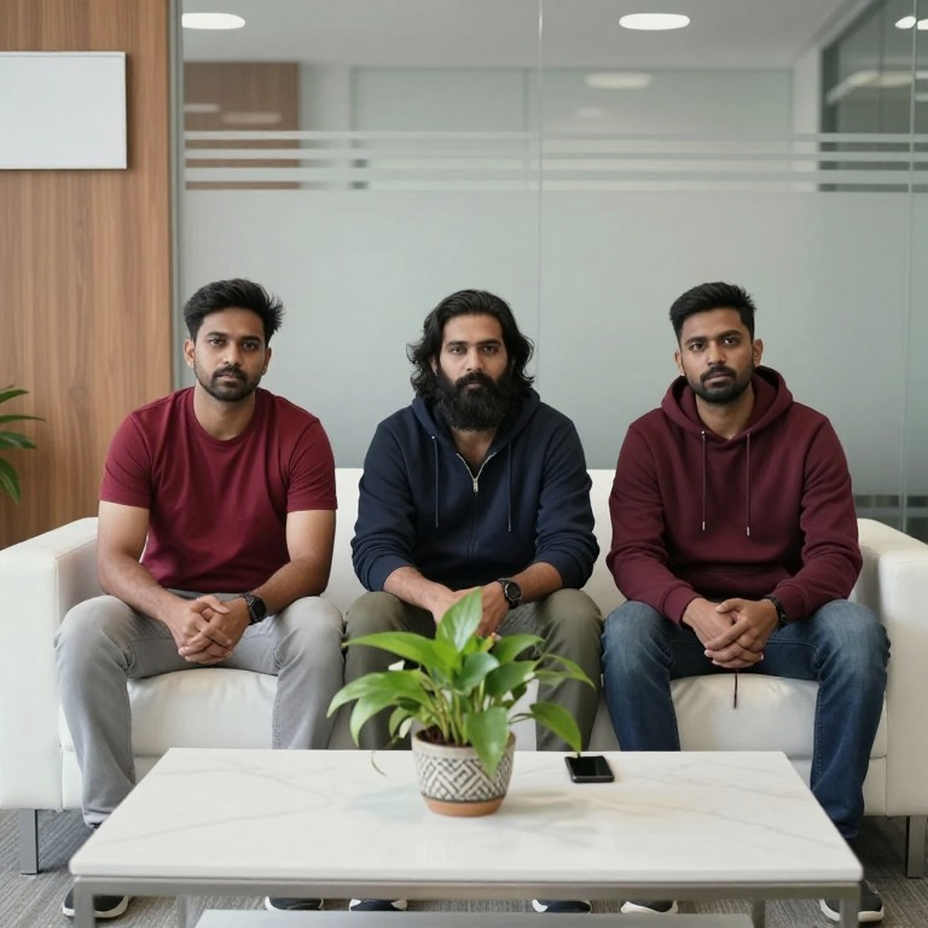
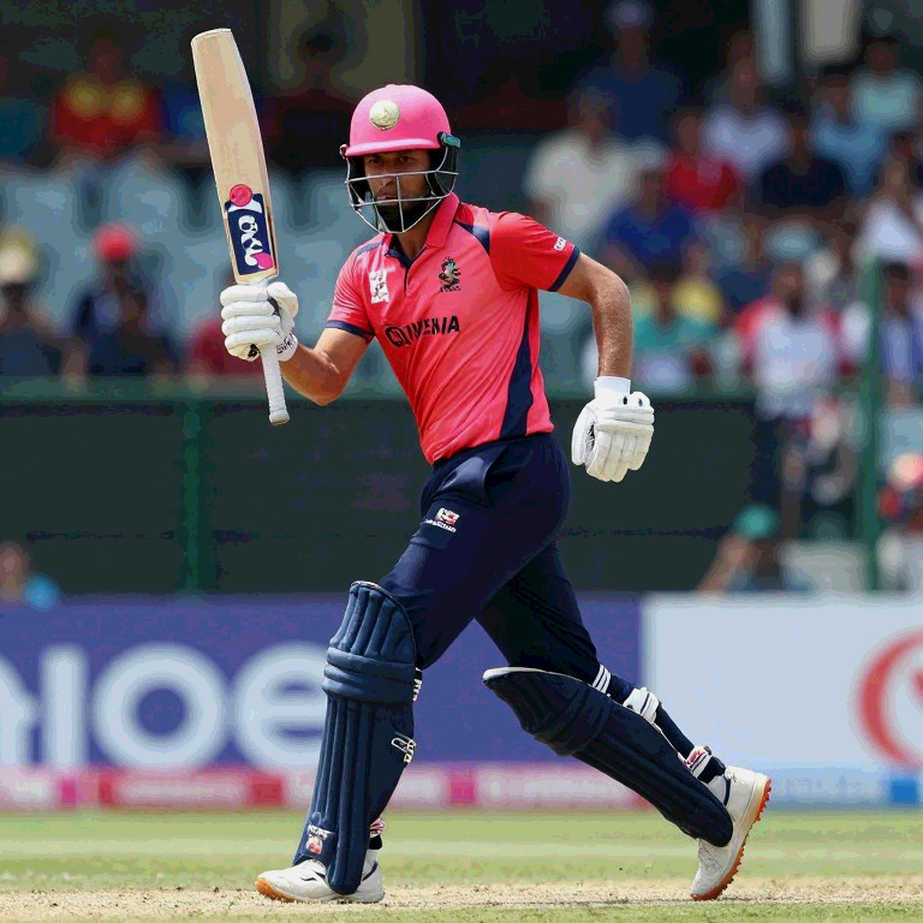
संबंधित खिलाड़ी
अनुशंसित
118/0 in Six Overs, Then Four Wickets in 37 Balls: Where the Cricket Hides in India's Record Night2026-10-30
The Empty Notebook on a Loaded Beat: What the Machine Dropped in Cricket Asia2026-10-24
Zero Information Points: When the Cricket Phase Model Returns N/A2026-10-29
The Blank Ledger: A Cricket Report That Arrived With Zero Facts2026-10-30
Jemimah Rodrigues: One Anniversary, Two Words, and the Question the Headline Never Asked2026-10-30